


A new analysis prepared for AARP Hawaiʻi finds that the Aloha State will need nearly 60,000 additional housing units by 2050 to meet future housing demand.
Much of that need will be driven by an aging population and rising housing costs.
The study was prepared by ECOnorthwest through AARP’s Livable Communities Technical Advisors Program. It reports that rising housing costs and limited supply are making it harder for residents to remain in their communities as they age.
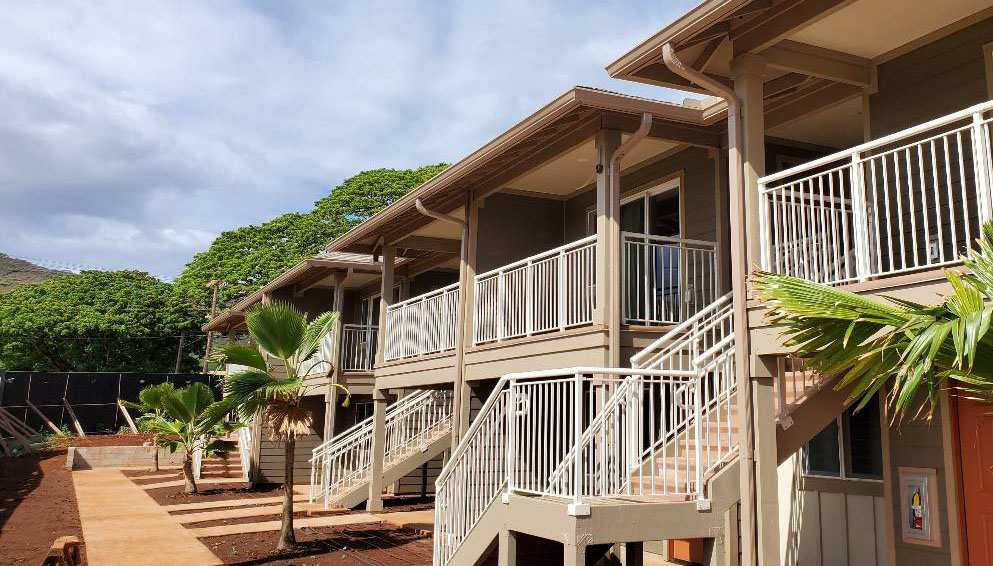
They also are also driving working age residents and young families out of the state.
“As the report notes, housing affordability isn’t just a housing issue. It’s a family issue, a workforce issue and a health issue,” said AARP Hawaiʻi State Director Kealiʻi Lopez in a release about the new analysis. “It’s not just about kūpuna needing affordable housing. When a lack of affordable housing forces young working families to leave Hawai‘i, the impacts are felt across generations.”
Lopez said the question now becomes not only where your children and grandchildren will live, but who will care for their aging parents and grandparents if families can no longer afford to stay in Hawaiʻi.
The report projects the state will need 59,669 new housing units statewide throughout the next 25 years. About two-thirds of that demand — roughly 39,000 units — is expected by 2035.
City and County of Honolulu accounts for the largest share of projected need, with an estimated 48,299 additional homes required by 2050.
Smaller but significant housing shortfalls are projected for Hawaiʻi, Maui and Kauaʻi counties.
The analysis points to Hawaiʻi’s rapidly aging population as a primary driver of future housing demand.
Residents age 65 years old and older now make up more than 21% of the state’s population, a share higher than the national average. Older households are expected to represent between 41% and 100% of new housing demand by 2050, depending on the county.
Many of those older households are expected to have limited or fixed incomes.
The report also estimates that nearly half of the housing needed for older adults will be affordable to households earning 60% of area median income or less, underscoring the scale of demand for lower-cost housing options.
At the same time, the report finds that high housing costs continue to contribute to out-migration among younger adults, particularly those ages 20 to 30 years old.
While Hawaiʻi added about 43,000 housing units between 2014 and 2024, the number of households grew faster than population and housing supply during the same period.
Statewide vacancy rates remain high, at nearly 14%, largely because of second homes and seasonal or recreational use. When those units are excluded, vacancy rates decline closer to levels indicating a constrained housing market.
The analysis does not account for historic housing underproduction prior to 2014 or future policy changes that could affect development. It also does not assume changes in recent migration trends.

Addressing Hawaiʻi’s housing gap will require increasing overall housing supply, reducing regulatory and infrastructure barriers that slow development and prioritizing homes that support aging in place, workforce retention and multigenerational families.
Without action, housing shortages are likely to continue driving population loss and straining the state’s workforce, health and social support systems.
Several bills AARP supports that could help increase the supply of affordable housing are still alive during this year’s Hawaiʻi Legislative Session:
- Senate Bill 2866: Continues a state rent supplement program for kūpuna.
- House Bill 2270: Relating to the Downpayment Loan Assistance Program.
- House Bill 1710: Addresses delays in State Historic Preservation Division review of certain properties.
- House Bill 1718: Would allow counties to facilitate transit-oriented mixed-use developments.
- House Bill 1740: Would establish perpetual deed restrictions for resale and rental of some state affordable housing projects.
- Senate Bill 2544: To establish a Hawai‘i Builds Pilot Program.
- House Bill 1920: Relating to the low-income housing tax credit.
- House Bill 2385: Would authorize general excise tax exceptions for some housing development projects.
- House Bill 1918: Would stablishe a conveyance tax when controlling interest in a property is transferred.
- Senate Bill 2061: Continues a program to allow for 99-year leasehold development, which AARP Hawai‘i supports with changes.