


An endangered native Hawaiian owl found grounded on Kaua’i’s North Shore last week died of severe malnutrition, highlighting both the species’ fragility and the importance of public awareness when encountering injured wildlife.
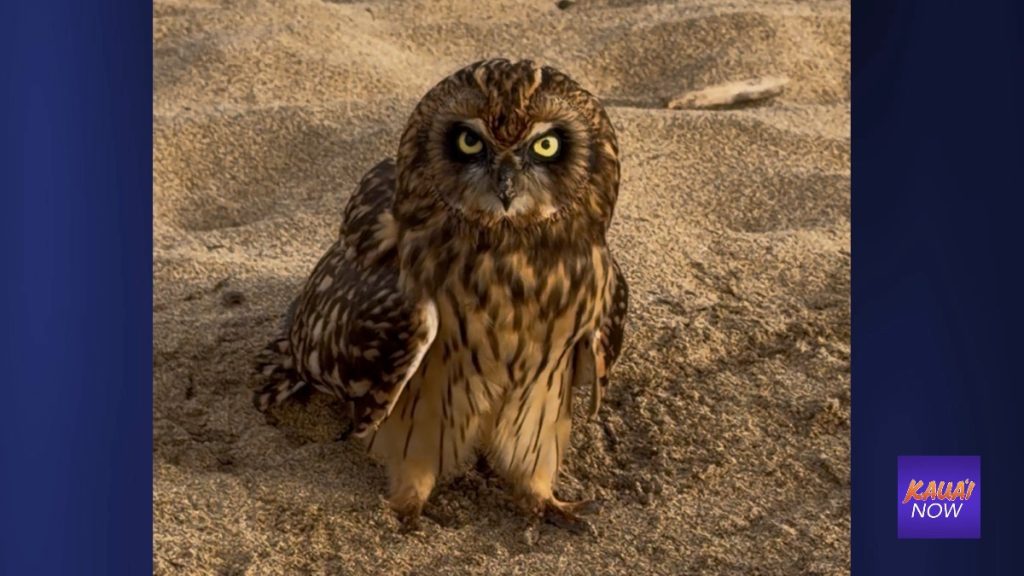
Garden Island resident Byron Blanchard said he was at Hanalei Beach surfing with his 7-year-old son when he discovered the owl emerging from the bushes.
“It almost didn’t look real when we saw it down on the beach,” Blanchard said.
After posting his encounter on his Instagram page, he said “some people commented that they thought it was AI.”
The owl, a protected native species known for daytime hunting and cultural significance in Hawai’i, remained on the sand while Blanchard filmed it. He said the bird seemed weak but alert, standing and looking around.
Concerned, Blanchard began calling local authorities before being directed to Save Our Shearwaters, a group that assists with injured native birds. The owl then briefly attempted to fly during the rescue but only managed about 20 feet before landing on the sand again.
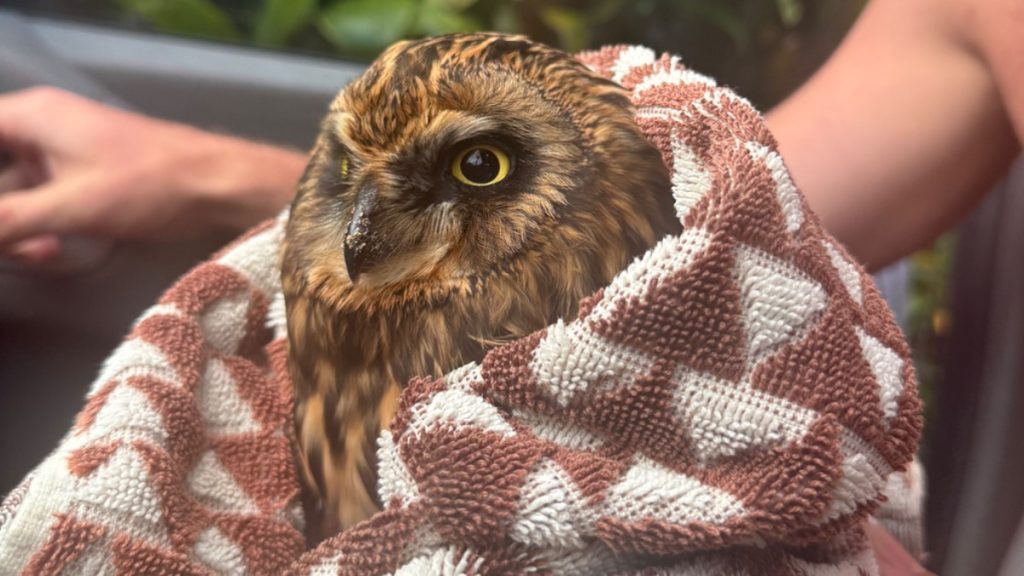
Following their guidance, Blanchard’s brother wrapped the owl in a towel and transported it to the Hanalei fire station, which has one of eight aid stations.
Blanchard also noticed something unusual; the owl’s pupils were uneven in size, a detail that later raised concerns.
According to Jacqueline Nelson, senior program manager at Save Our Shearwaters, the owl died before it could reach its care facility. The bird was “extremely emaciated,” meaning it had little to no fat or muscle reserves, suggesting it had possibly been unable to hunt for an extended period.
The unequal pupil dilation observed in Blanchard’s video may indicate “a neurological issue, like a head injury,” Nelson said, although the exact cause could not be confirmed.
The Pueo is the only native owl, and the only native bird of prey on Kauaʻi. It is also an endemic subspecies of the short-eared owl, found only in the Hawaiian Islands. The bird is not a common species and is vulnerable to a number of threats, including being killed by cats and dogs, other introduced predators, and collisions with cars.
Nelson added that this case underscores the need for the public to act quickly — but carefully — when encountering injured or grounded birds.
“I was one of those people who didn’t know what to do,” Blanchard said. “It took me a while to figure out what to do.”
He said that the experience was both awe-inspiring and heartbreaking.
“I’ve seen them around throughout my life,” he added. “I’ve never seen one up close like that, and it was pretty surreal to see its eyes and everything. They’re just beautiful animals. I just wish it would’ve gone better.”
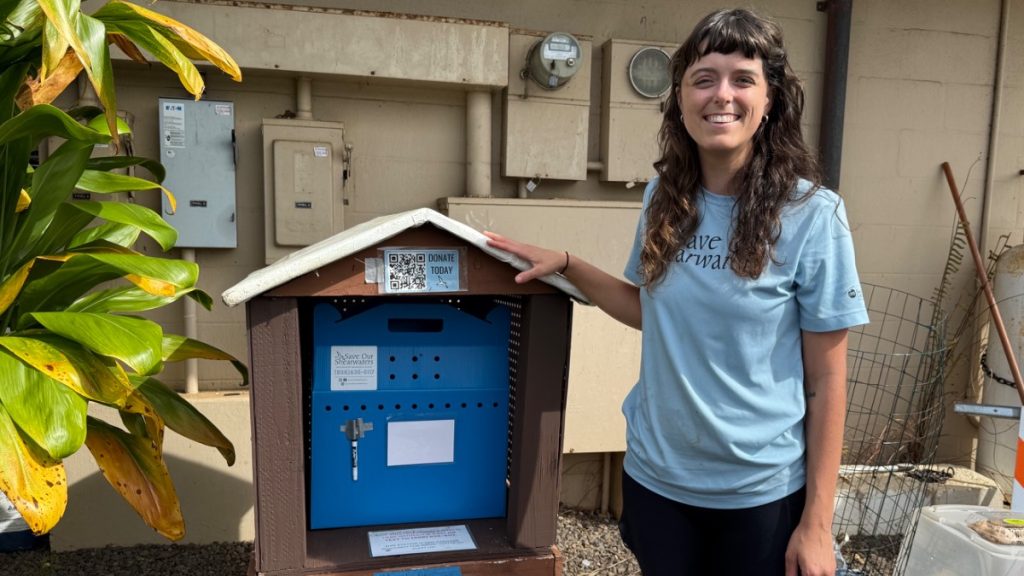
(Xiomara Yamileth/ Kaua’i Now)
Nelson advises residents and visitors who encounter an injured or grounded native bird, such as an owl or shearwater, “to give us a call directly, and take photos and videos. And we can advise whether or not to pick them up.
“We always say to call first before interfering with the wildlife, if at all possible, so that we can confirm it does, in fact, need help.”
Nelson said it was clear this pueo needed assistance.
“The faster people can get us injured wildlife, the higher the chance of recovery,” she said.
Blanchard said: “In the future, I’ll probably do the same thing, and try and help them however I can, and I hope everybody else does, too.”
Nelson said the organization is thankful for all the people who have seen injured birds and called and cared enough to get those birds help.
“That’s the reason we’re able to do what we do because the community is the one finding them and bringing them to fire stations and helping us out,” she said. “We can’t do what we do without the support of the community.”
Residents and visitors are encouraged to save on their phones the Save Our Shearwaters Hotline number: 808-635-5117. The hotline can be called or texted 24/7.
To learn more about the Save Our Shearwaters organization, click here.