


This powerful new exhibition will feature the work of Nālani Kanakaʻole, Sig Zane, and Kūhaʻoʻīmaikalani Zane—a Hilo-based family of artists whose creative practices are deeply rooted in hula ʻaihaʻa.
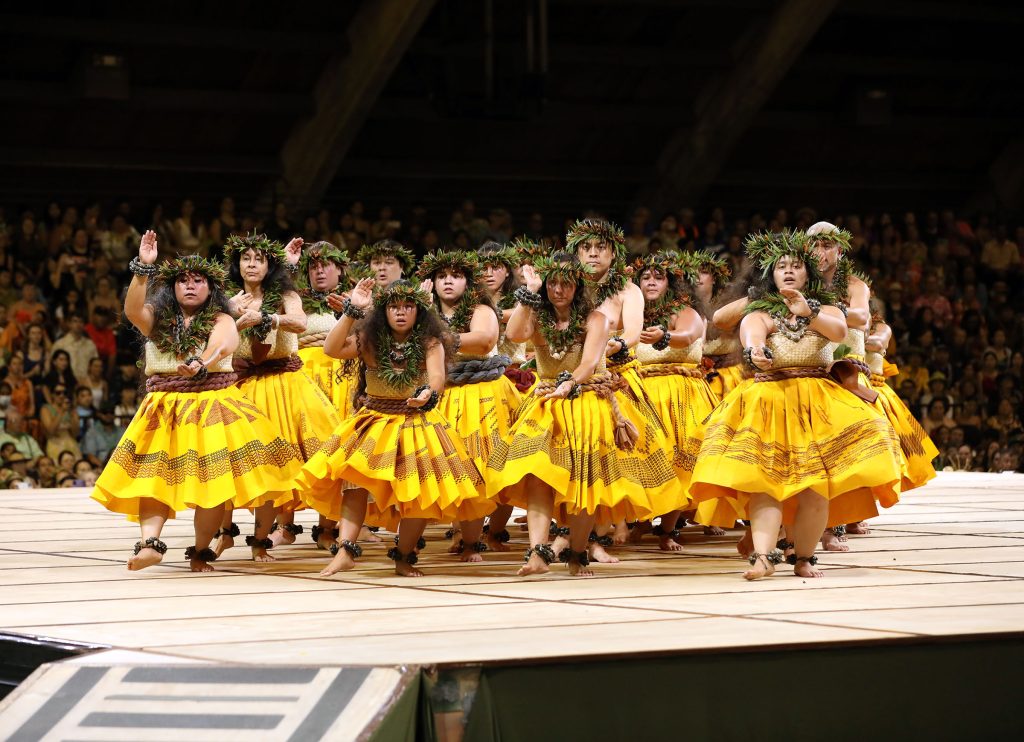
Hula ʻaihaʻa is the low-postured, vigorous, bombastic style of hula that Kanakaʻole was known for as kumu hula of Hālau o Kekuhi. The hula springs from the eruptive volcano personas of Pele and her sister Hiʻiaka, characteristic of Hawaiʻi Island’s creative forces.
The Bishop Museum, the State of Hawaiʻi Museum of Natural and Cultural History, on Oʻahu is presenting “Ea Mai ʻEiwa: Patterns of Practice” in the J. M. Long Gallery beginning on Saturday, April 18, 2026.
The exhibition title references “Kūhaʻimoana,” a chant describing the migration of shark gods from Kahiki (ancestral homeland) to Hawaiʻi. “Ea Mai ʻEiwa” reflects the strength, resilience, and environmental knowledge embodied in these ancestral stories.
Bringing together new and existing works alongside botanical specimens and cultural treasures from Bishop Museum’s collections, the exhibition weaves themes of migration, community resilience, and environmental stewardship—offering insight and inspiration for today.
“This exhibition demonstrates that the gap between historic collections and contemporary art is actually a lot smaller than people think,” said Sarah Kuaiwa, Ph.D., Bishop Museum curator for Hawaiʻi and Pacific Cultural Resources. “Audiences will see how the artists use the same materials as pieces in Bishop Museum collections but in different forms. The resonance between the artist’s work with mea kupuna (ancestors) is what makes ‘Ea Mai ʻEiwa’ a uniquely Bishop Museum exhibition.”
Kuaiwa curated the group exhibitions along with co-curator, kumu hula Kauʻi Kanakaʻole, and Bishop Museum exhibit designer, DeAnne Kennedy.
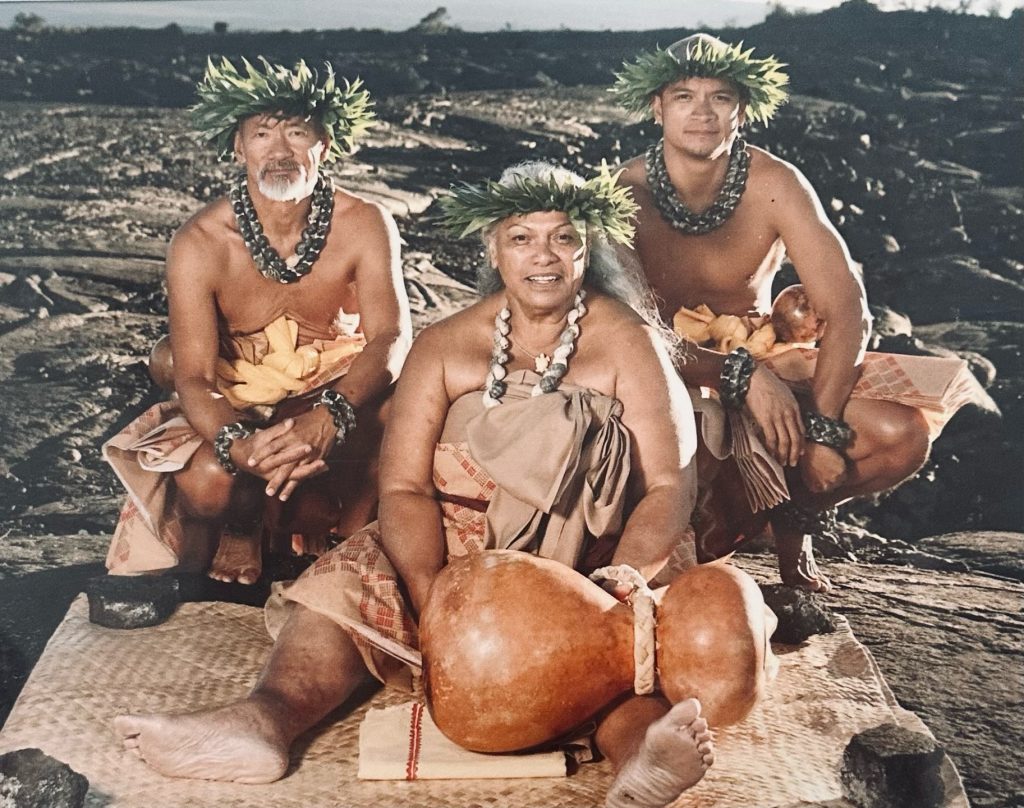
The artists’ work across visual and performing arts is continually charged and sustained by hula. From Nālani Kanakaʻole’s art direction and choreography to Sig Zane’s photography and textile design, and Kūhaʻoʻīmaikalani Zane’s graphic design and immersive installations, each artist channels ʻike (knowledge, wisdom) carried through generations.
“Through repetition, deep study, and consistent practice, mastery is achieved. As practitioners of hula, the artists have continued to deepen their understanding of the natural and spiritual world, which has in turn inspired their art practices,” Kuaiwa said. “They aim to produce art in various visual media not only to educate, but to also be aesthetically celebrated and enjoyed.”
“Patterns of Practice” was suggested by Sig Zane as a way of representing how the artists hone their skills.
“‘Kūhaʻimoana,’ for me, has many layers to it,” Kūhaʻoʻīmaikalani Zane said. “On a first take, it’s a migratory chant that compares migrations to waves of ocean-navigating sharks. That metaphor sets out the tone of connectivity between our natural environment and the beings that inhabit it.”
“‘Kūhaʻimoana’ is an example illustrating metaphorical depth within Hawaiian poetry,” said Sig Zane. “The importance of navigation surfaces in day-to-day cultural practices. This archaic chant reveals nuanced content, giving us a peek into hierarchy, dualities, and familial belief systems.”
Kanakaʻole passed away in January this year, so Kauʻi Kanakaʻole hopes that “Ea Mai ʻEiwa: Patterns of Practice” reflects Kanakaʻole’s philosophy of practice and piques curiosity within people about others’ stories, history, and culture.
“She intentionally taught hula with depth of language, craft, and art form to encompass a full-on lifestyle commitment,” Kanakaʻole said. “This was her everyday; the way she learned, grew, and inspired.” “I would love for guests to leave (the exhibition) with a mixture of awe, appreciation, and curiosity.”
Highlights of the “Ea Mai ʻEiwa: Patterns of Practice” exhibition include:
- Nālani Kanakaʻole’s kite installation, “Kūhaʻimoana,” her last large-scale installation before her passing
- Botanical specimens from various locations across Hawaiʻi Island, chosen to represent their hula ʻahu (altar) and sources of inspiration the artists frequently draw from
- Uniquely colored kūpeʻe (sea snails) shells made into adornments, as well as adornments made to look like kūpeʻe shells
- Kapa (barkcloth) made from the 19th century with dynamic designs
- ʻAwa (kava, Piper methysticum) cups and kānoa (kava bowl) associated with the aliʻi
- New and archival sketches and rubylith artworks by Sig Zane from 1990 to present
- A collection of family photos from the Kanakaʻole ʻOhana
- Memorabilia and ephemera from the theatrical performance, “Holo Mai Pele” (1995-2000)
“Ea Mai ʻEiwa: Patterns of Practice” will be presented in both ʻŌlelo Hawaiʻi and English, and will be on view until Sept. 20, 2026.
For more information, please visit bishopmuseum.org.