



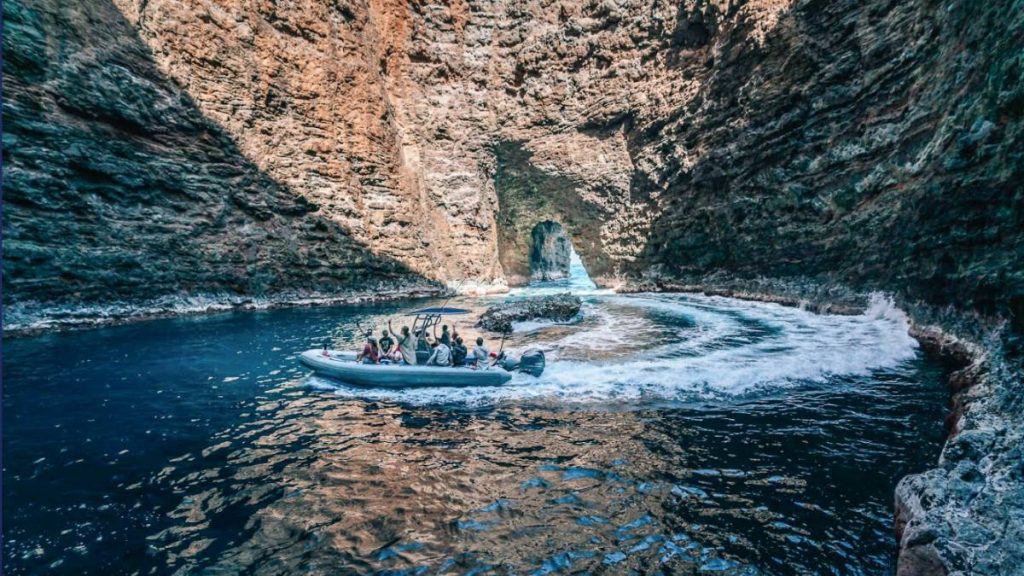
Beyond the cinematic beauty of the Nāpali Coast lies a landscape layered with spiritual meaning, ancestral memory and cultural continuity.
Long before becoming a destination for hikers and boaters, the coastline along Kaua’i was home to thriving Hawaiian communities. Archaeological surveys confirm extensive agricultural terraces, habitation sites and ceremonial structures throughout the valleys of the coast, according to Hawai‘i State Parks and the state Department of Land and Natural Resources.
Understanding the Nāpali Coast means looking beyond the view.
Heiau: Sacred places of ceremony and alignment
Scattered along the Nāpali Coast are ancient heiau, which are traditional Hawaiian temples built from carefully placed stones. These structures served as places of ceremony, prayer, healing, navigation and seasonal observance.
Heiau often were aligned with natural landforms and celestial patterns, reflecting a deep relationship between environment and spirituality, according to the Hawai‘i State Historic Preservation Division.
Different heiau served different purposes. Some were dedicated to the god Lono, who is associated with rainfall, fertility and agriculture. Others honored the god Kū, associated with governance and strength. Their presence on the Nāpali Coast underscores that this coastline was not remote wilderness — it was a lived-in and spiritually significant homeland.
To learn more about Hawaiian deities and mythology, click here.
Visitors are reminded that many of these historic sites are protected under state law. People should never climb on stone structures or remove rocks, as even minor disturbances can damage archaeological integrity.
Sea caves and archaeological sites
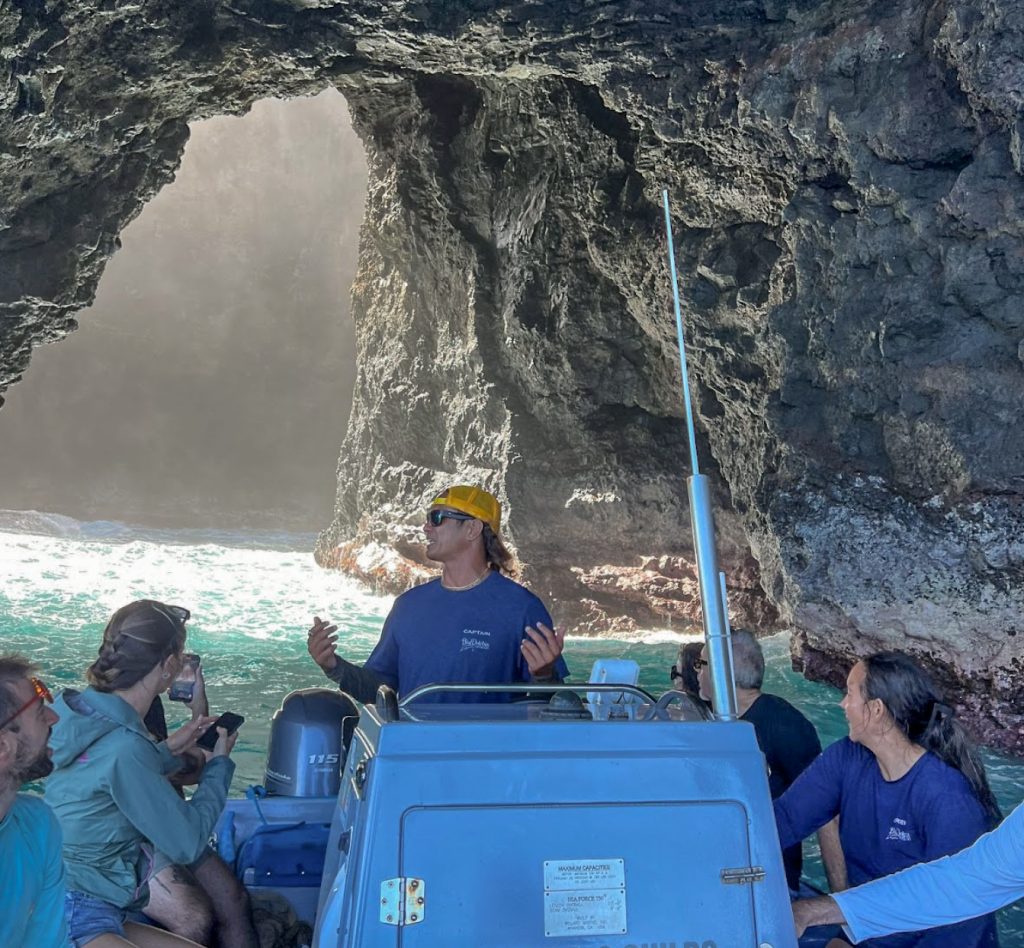
The sea caves carved into the Nāpali Coast’s cliffs are geological marvels, but they also are culturally important. Archaeological documentation across Hawai‘i indicates that coastal caves were historically used for shelter, storage, fishing access and at times for ceremonies.
Many sites across the islands remain intentionally unmarked to prevent disturbance. What may appear to be scattered stones could be remnants of terraces, platforms or places once inhabited by humans.
The State Historic Preservation Division emphasizes a simple principle: look, learn and leave everything in place.
Sacred time: The Hawaiian moon calendar
Sacred places were guided by sacred time.
Traditional Hawaiian culture follows a lunar calendar known as the mahina cycle. Each of the 29 to 30 moon phases carries meaning and practical guidance for fishing, planting, gathering and ceremony.
The University of Hawai‘i’s Institute for Astronomy and Hawaiian Studies programs explain that lunar phases were closely observed because tides, fish behavior and plant growth correlate with the moon’s cycle.
Understanding the Hawaiian moon calendar
The traditional Hawaiian lunar calendar follows a 29 to 30 day cycle, with each night of the moon carrying a specific name, meaning and purpose. Unlike the Western calendar, which is fixed by months and dates, the Hawaiian system is observational — guided by the rising moon, ocean tides, rainfall and seasonal change.
Each phase informed daily life:
- 🌱 Planting & Agriculture: Certain Kū phases were ideal for planting crops that grow upward, while other nights were better suited for root crops.
- 🎣 Fishing & Ocean Gathering: Fish behavior shifts with moonlight and tides, making some phases more abundant than others.
- 🌕 Ceremony & Reflection: Full moon phases like Hoku and Māhealani were associated with illumination, abundance and spiritual clarity.
- 🌑 Rest & Caution: The final nights of the cycle were often considered quieter or less favorable for major activity.
In spring, when rainfall nourishes the valleys and ocean conditions shift, lunar knowledge helped guide planting cycles and community life along places like the Nāpali Coast.
Spring Phases and Seasonal Renewal
Spring marks a time of growth and transition in Hawai‘i. During this season, specific moon phases carried particular significance.
- Hilo: The first crescent moon; a time for beginnings and planting.
- Hoaka: Associated with clarity and strengthening growth.
- Kū phases (Kū Kahi, Kū Lua, Kū Pau): Considered strong moons, favorable for planting crops that grow upward.
- Hoku: The full moon associated with abundance and visibility.
- Māhealani: One of the brightest full moons, symbolizing illumination and insight.
According to educational materials from the Kamehameha Schools Cultural Resources division, lunar knowledge was essential to agriculture, fishing cycles and ceremonial timing.
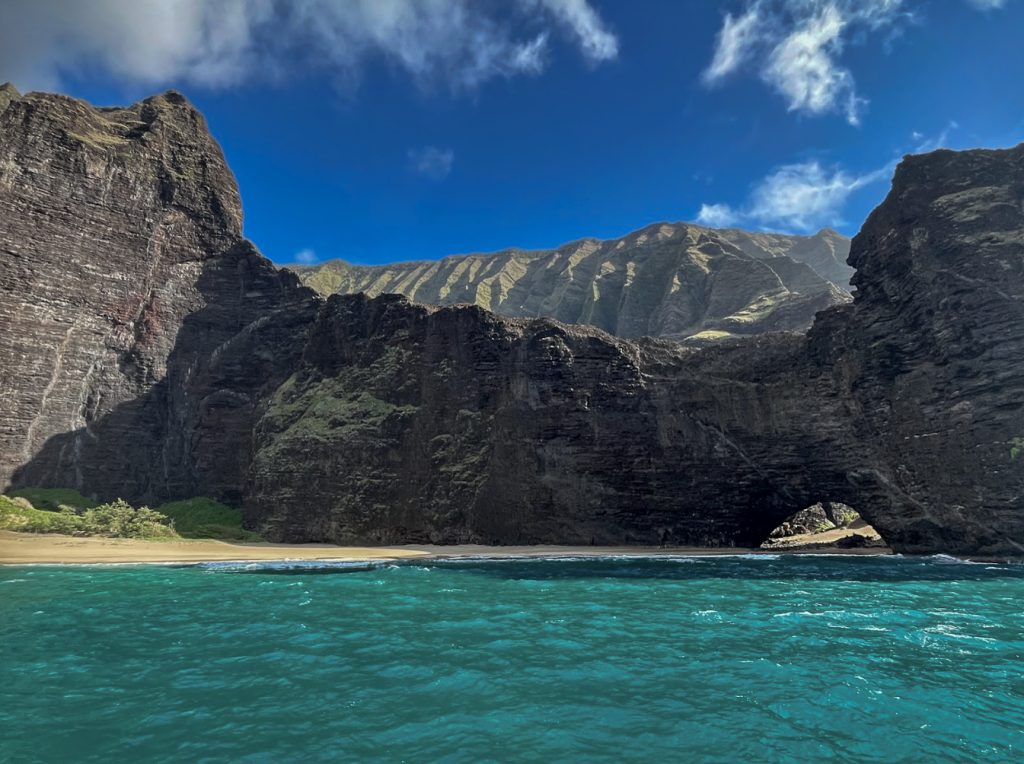
On the Nāpali Coast, where tides shape fishing and rainfall nourishes valley loʻi kalo, the moon remains visibly connected to daily conditions.
In Hawaiian culture, the moon is not just something to observe, it is something to live by.
A living cultural landscape
Today, much of the Nāpali Coast is protected as part of Nāpali Coast State Wilderness Park, managed by the state Department of Land and Natural Resources.
Protection, however, is not only regulatory, it is relational.
When exploring the Nāpali Coast:
- Stay on marked trails.
- Do not enter restricted archaeological areas.
- Never remove stones or artifacts.
- Follow all posted state guidelines.
- Approach the land with humility.
The cliffs may look wild, but they are storied. The valleys may seem untouched, but they are ancestral.
Why this history matters
Understanding the heiau, caves and lunar traditions of the Nāpali Coast transforms a scenic visit into a journey of stewardship.
The coastline is not empty. It is layered with ʻike (knowledge), moʻolelo (story) and sacred intention. The same moon that guided planting cycles centuries ago still rises over the pali today and continues to guide many.
To truly experience the Nāpali Coast is to move through it with awareness — honoring both the land and the generations who came before.