



A new research effort on Kauaʻi’s west side is uncovering a troubling trend that far more endangered nēnē, the Hawaiʻi state bird, are dying along a rural highway than previously believed.
Dr. Andre Raine, science director at Archipelago Research and Conservation in Hanapēpē, said the Mānā Plains Nēnē Project that began in September is focusing on the 5-mile stretch of the Kaumualiʻi Highway in West Kauaʻi where mortality rates for nēnē have spiked.
“Itʻs really heartbreaking to see nēnē getting killed needlessly on the road,” Raine said.
“The last six months of surveys have highlighted just how dangerous that stretch of road is to Nēnē, as well as highlighting the key areas where the highest numbers of mortalities are. The team has also started to formulate ideas on how to reduce these deaths, which we will be discussing with our project partners in the months to come.”
“It’s a difficult problem, but we are confident there are workable solutions,” he added.
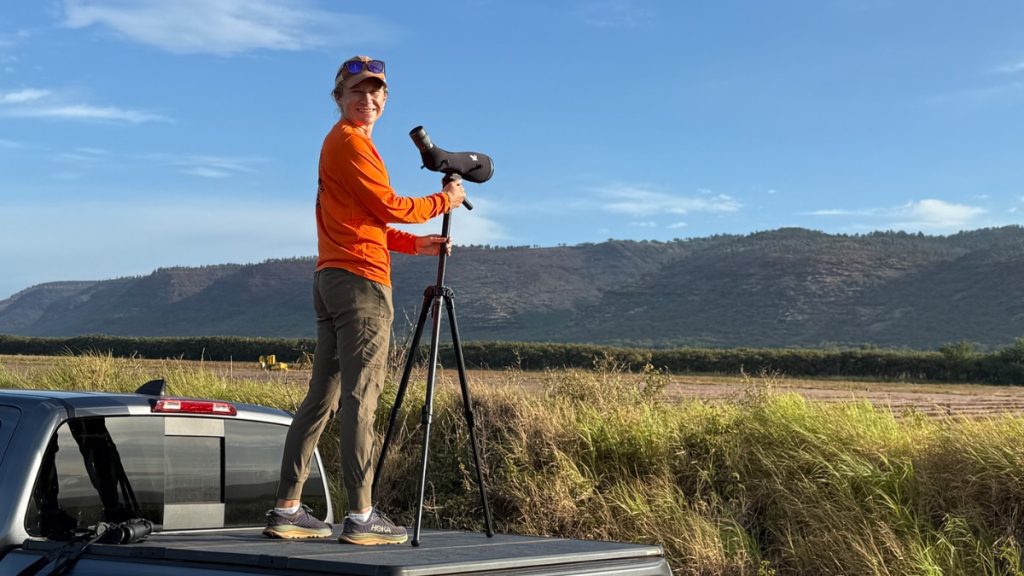
Dr. Raine appointed biologist Jill Soller to lead the year-long project, which includes research, collecting data and investigating vehicle collisions involving the Hawaiian goose in the agricultural landscape of the Mānā Plains.
In the first month of the project, the team documented 55 dead nēnē along that five-mile stretch, a number researchers say is more than triple earlier estimates.
Raine said 55 deaths are “an astounding number considering how rare the species is.”
“We knew how bad this stretch of highway was for Nēnē, but the number of dead birds that we have found since the project started is really shocking. We’ve had 65 dead Nēnē so far, which really is a significant number for an endangered species.”
The nēnē population has increased to roughly 3,864 across the state, with Kaua’i accounting for 60% of the total.
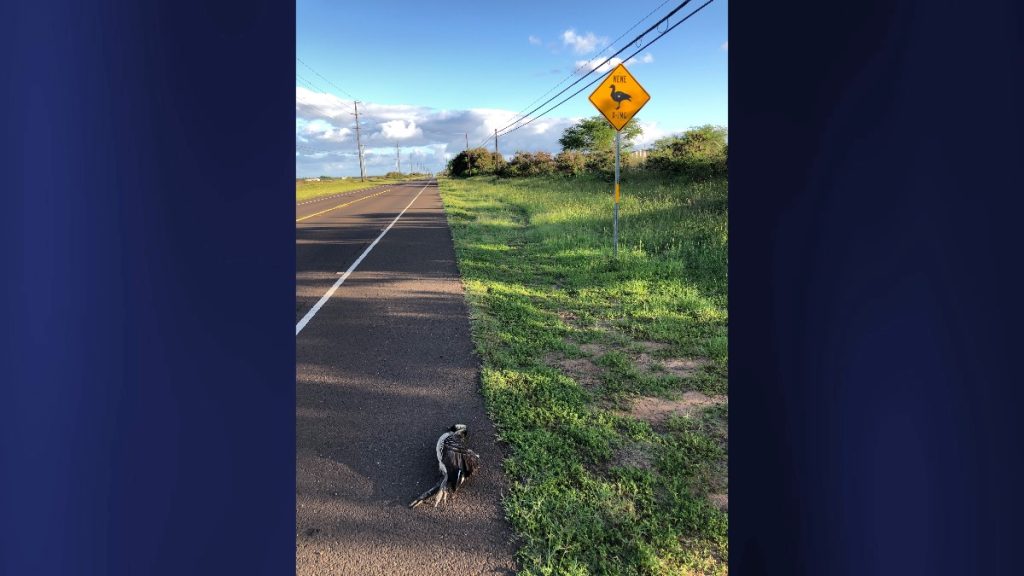
“In previous years, we thought the average was around 17 birds in that same amount of time,” Soller said during the March 9 field survey.
“Now that we have concentrated eyes on the area and we’re collecting every carcass, we’re seeing the problem is about four times worse than anyone thought,” she said.
The species evolved from a common ancestor of the Canadian goose after geese arrived in the islands hundreds of thousands of years ago.
Their numbers represent a remarkable recovery after the species nearly vanished.
Soller explained that in the 1950s, “there were only about 30 left in the entire world. Conservation efforts brought them back, so it’s a really inspiring success story. But compared to historical estimates, we’re still nowhere near what the population once was.”
Early explorers estimated that tens of thousands once lived across the islands. Habitat changes, invasive predators, and hunting all contributed to the species’ decline.
“It would be sad to see that number decline after such a success story,” added Soller.
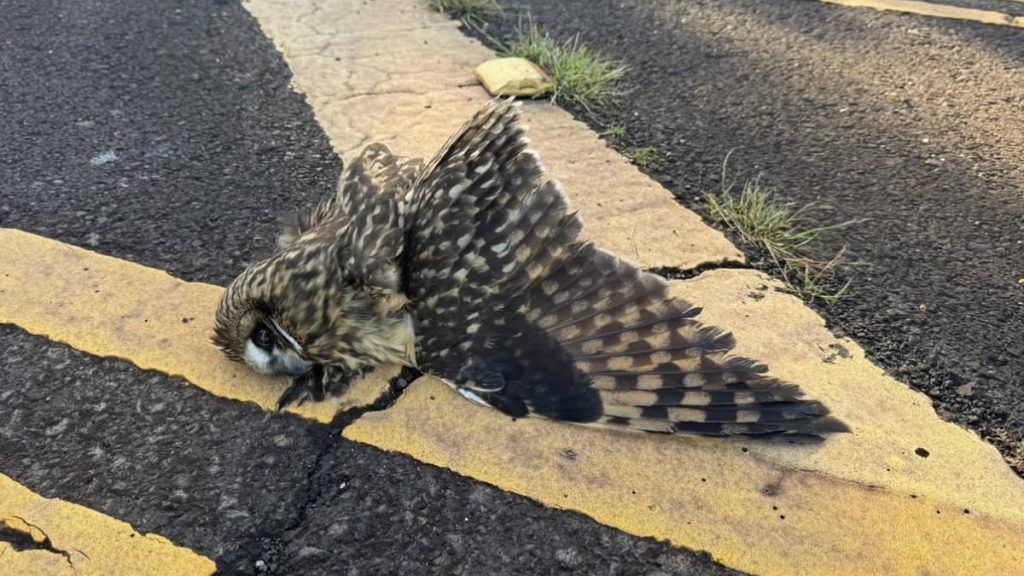
Now, vehicle collisions are a growing concern in areas where birds forage near roads.
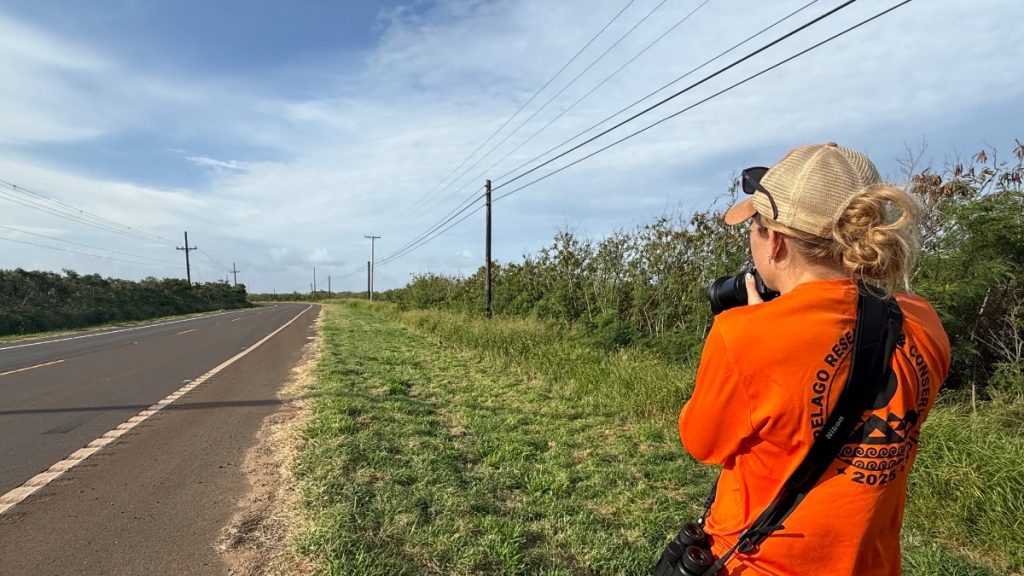
Each day, Soller drives the 5-mile study corridor searching for injured or dead birds. When one is found, it is examined to determine the likely cause of death.
“The birds are smart,” Soller said. “They now recognize my truck and several others who check on the birds have also mentioned the same.”
The effort is supported by multiple partners, including the Hawaiʻi Department of Land and Natural Resources, the Hawaiʻi Department of Transportation, farmers in the region, and biologists from Pacific Missile Range Facility.
“The collaboration has really helped reveal the scale of the problem,” she said. People probably see birds on the road but keep driving,” Soller said. “Because no one was systematically documenting them, those deaths weren’t getting recorded.”
Archipelago Research and Conservation estimates that nearly 65 nēnē have died in the area during the first six months of the project, representing roughly 2% of Kaua’i’s population.
Most deaths appear to be caused by vehicles, although some birds may have collided with power lines before falling onto the roadway. Most of the power lines across the island have diverters that help prevent birds from hitting them.
“It has been shocking, added Raine, “to find so many dead birds, including pairs of nēnē and entire nēnē families. Seeing a nēnē standing on the side of the road mourning its dead partner is a really tragic sight, and really brings home the reality of the situation out there.”
To better understand how the birds move through the area, researchers captured six adult males earlier this year and fitted them with GPS transmitters. The devices send a location every minute, allowing scientists to map daily movements and identify high-risk areas.
The team also is studying habitat patterns by documenting where birds feed and rest. Nēnē are attracted to short grass and agricultural fields where they eat grasses and crops.
“That manicured green grass is really appealing to them,” Soller said. “So they’re often in places that are very visible to humans — golf courses, lawns and farms.”
A fun fact discovered: “nēnē really enjoy corn,” she added.
Traffic data also is being collected with roadside monitoring equipment to measure vehicle speeds and traffic volume. Researchers suspect that speeding along the relatively isolated roadway may contribute to collisions, as multiple tire tracks are visible along the stretch.
Early discussions about possible solutions to protect the birds already are underway.
Raine added: “We will continue to conduct our surveys in the project area and work with our partners to find workable solutions to this huge conservation issue. We are also continuing to monitor the six birds that we attached tracking tags to.
“We are getting really interesting data on the fine-scale movement patterns of Nēnē through the movements of these individuals, and this data will give us better insight into how they utilize the road and the roadside verges.”
Ideas being considered include additional warning signs, reduced speed limits, changes to roadside vegetation and other modifications to discourage birds from feeding near the highway.
“We’re hoping that by the end of the study we’ll be able to say, ‘Here’s the pattern we found and here’s a solution based on that,'” Soller added.
“Even partial reductions in road deaths could make a difference for the recovering species. We’re never going to prevent 100% of the deaths,” Soller said. “But if we can reduce them, that would be a huge victory.”
Public reporting is also very critical to the study. Residents or motorists who encounter injured or dead birds are asked to report them to wildlife officials rather than moving them.
“Take a picture and call us,” Soller said. “Leaving the bird undisturbed helps us determine what caused the death and identify patterns.”
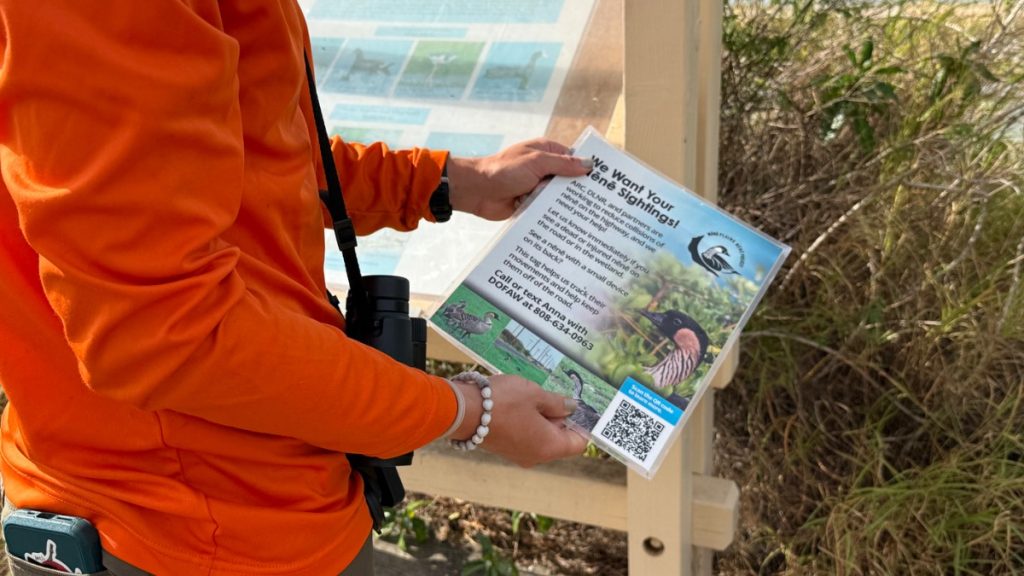
The team has been posting notices across the island to help residents and visitors understand the appropriate action.
Soller added that anyone who finds an injured bird can either scan the QR code on the posters or contact Anna at the Department of Fish and Wildlife. Her contact information is also listed on the posters displayed across the island.
Additional details about the project will be shared at upcoming community outreach events.
“Seeing the community care about the nēnē has been really inspiring,” she said. “When people share information and work together, that’s how we figure out solutions.”
Raine hopes motorists can “remain vigilant for native wildlife while driving on all of Kauai’s roads. And if you are interested in doing more for our endangered wildlife, consider volunteering with one of our awesome local conservation organizations.”
To learn more about the Mānā Plains Nēnē Project, click here. To explore volunteer opportunities with ARC Kauaʻi, click here.