



Traffic fatalities heading into 2026 have shown a decline compared to the same period in 2025.
From Jan. 1 to March 12, 2025, there were 31 fatalities statewide, according to Hawai‘i Department of Transportation. And this year so far, there have been 16 fatal crashes.
Preliminary data from the state department show that speed contributed to nearly half of those fatalities and impairment is suspected in several cases. Additionally, two lives could have been saved by the use of a seatbelt or helmet, with six pedestrians, one motorcycle rider and one ATV rider among the victims.
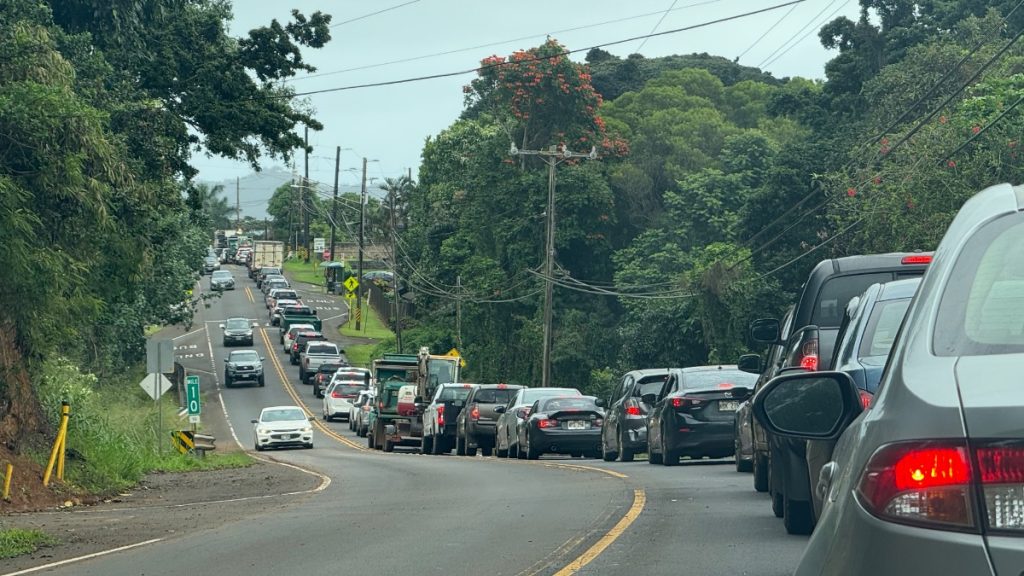
Kaua‘i County officials have so far reported one fatality this year that occurred on New Year’s Day on Kūhiō Highway near the Wilcox Medical Center in Līhu‘e.
“We’ve seen traffic fatalities cut in half as compared to last year and we need to double down on our combined efforts to keep all highway users safe,” explained Hawai‘i Department of Transportation Director Ed Sniffen.
This decline comes after the Hawai‘i Department of Transportation launched its statewide 2026 Safe Roads Challenge in January, which turns traffic safety into a game with a free safe driving app.
The goal of the app is to reduce the number of crashes, save lives and promote safer driving habits.
Since launching the initiative, 1,704 Hawai‘i drivers have signed up to learn more about their driving, get safe driving tips and compete for prizes. Drivers can learn more about how to sign up and the monthly and grand prizes at t and itand https://hidot.hawaii.gov/highways/hawaii-safe-roads-challenge/.
For a full list of active safety projects and planned infrastructure countermeasures, see https://highways.hidot.hawaii.gov/stories/s/Safety-Goals-2026/94wy-jt7r.
Hawai‘i Department of Transportation is also supporting several traffic safety bills that are currently moving through the Hawai‘i State Legislature. Many focus on familiar issues like impaired driving, speeding, pedestrian safety, e-bikes and driver and vehicle requirements.
“As the needs and risks on our roadways evolve, we are continuing to advance legislation that strengthens safety for all who travel Hawaiʻi’s roads,” said House Transportation Committee Chair, Rep. Darius Kila. “We all have loved ones waiting for us at home, so let’s each do our part to arrive alive.”
The following House Bills are supported by the Hawai‘i Department of Transportation:
Move Over Law expansion to include all types of stopped vehicles displaying hazard warning lights or other recognized safety signals. Includes revision of §291-14 to include criteria prohibiting carrying passengers in the bed of a vehicle on roadways with speed limits of 46 mph or higher or three or more lanes traveling in the same direction.
The goal of the measure is to improve safety by requiring drivers to slow down or change lanes when approaching all types of stationary vehicles with warning signals and by adding clarifying language as guidance for riding in pickup truck beds.
Amends the driver’s license renewal process to require certain applicants to complete an educational course. The goal of the measure is to enhance traffic safety by improving driver knowledge and skills.
Defines electric bicycle and electric micro-mobility device. Authorizes the seizure of non-road-legal devices and prohibits persons under the age of sixteen from operating class 2 or class 3 devices without supervision. The goal of the measure is to provide clear guidance on the safe operation of e-bikes and other micromobility devices.
Establishes a program for active intelligent speed assistance systems as court-ordered penalty for repeat speed offenders. The goal of the measure is to leverage technology to reduce speeding-related crashes.
Creates a Transportation Administrative Hearings Branch within HDOT to handle contested transportation-related administrative cases such as automated citations, permit issues, CDL suspensions, and harbor/airport disputes. Centralizing these matters streamlines processes, ensures consistent standards, and reduces court backlog.
The goal of the measure is to improve efficiency, consistency, and fairness in transportation-related adjudications while reducing court workload and administrative duplication.
Authorizes stop-arm cameras on school buses to enforce §291C-95 as civil violations via HDOT. Establishes owner liability with escalating fines ($250–$300), requires police image review, and mandates privacy safeguards (data deleted within 90 days). The goal of the measure is to deter illegal passing and protect students; includes unspecified implementation appropriation.
Requires helmets for riders under 18 on bikes, mopeds, e-bikes, and scooters, and for all ages on Class 3 e-bikes/mopeds. The goal of the measure is to promote safety and prevent head injuries.