



University of Hawaiʻi at Mānoa for more than a decade has been on the front lines of the battle against the invasive coconut rhinoceros beetle.
Researchers in the university’s College of Tropical Agriculture and Human Resilience are now seeing progress in a promising weapon: viruses.
“Pathogens are being used, but viruses are being underutilized as far as I’m concerned,” said College of Tropical Agriculture and Human Resilience Department of Plant and Environmental Protection Sciences researcher and virologist Mike Melzer. “I know we can find viruses that will have a really good impact on important target species that are pests in Hawaiʻi.”
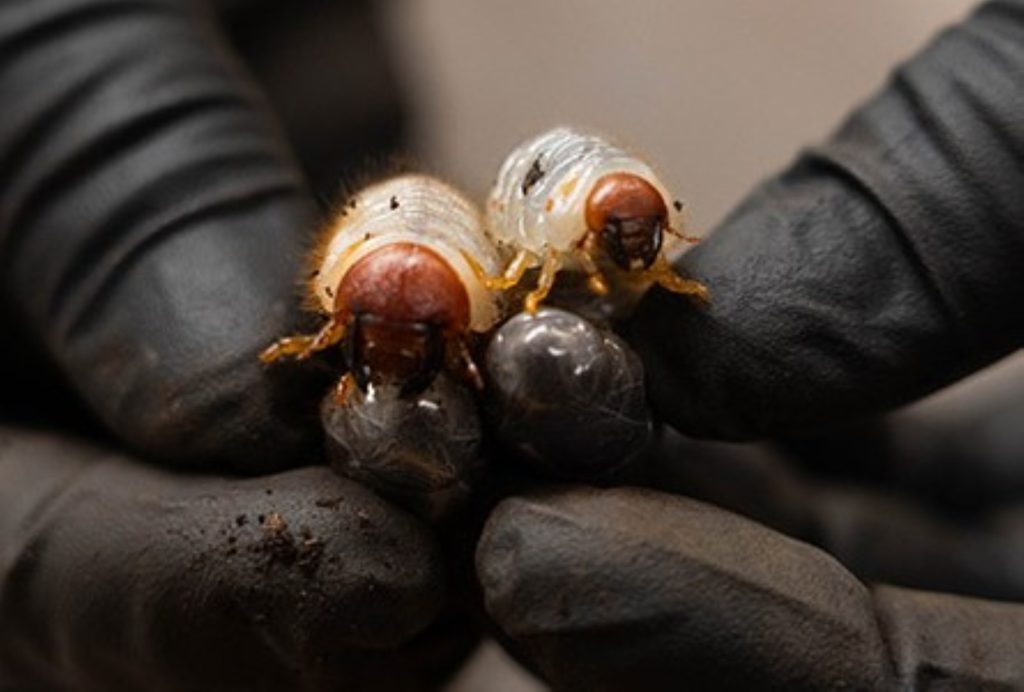
A virus infects coconut rhinoceros beetles from the inside, weakening and killing them before they reach adulthood. Therefore, by targeting larvae, the virus can suppress beetle populations with time while minimizing harm to non-target species.
Researchers think the virus should also infect adults, making them lethargic and less likely to damage palms.
Rigorous safety standards
Federal regulators told University of Hawaiʻi researchers for a decade that the a virus could not be brought into Hawaiʻi because containment facilities are lacking.
A breakthrough finally came in early 2025 through a collaboration with the U.S. Department of Agriculture’s permit unit.
Permits now specifically restrict research to the larval stage because larvae cannot fly, significantly reducing the risk of an accidental environmental release.
“We rear [coconut rhinoceros beetles] for research purposes and we’ve never lost an adult out of there,” Melzer said.
Protecting the Kauaʻi stag beetle
A primary goal of current lab testing is to ensure a virus is host-specific and will not harm Hawaiʻi‘s native ecosystem.
While viruses were used effectively in other Pacific nations, Melzer emphasized that Hawaiʻi has unique native species to protect, such as the Kauaʻi stag beetle.
“Nobody really gives too much of a thought about [coconut rhinoceros beetles] where the virus has been released” Melzer noted, explaining that while some damage remains, the virus keeps it at a manageable “2 out of 10” rather than the devastating levels seen in Hawaiʻi.
A good night’s sleep
Melzer and former student Nelson Masang Jr. traveled in August 2025 to Palau — a region where a virus has successfully managed the invasive beetle for decades — to collect genetic variants of that virus.
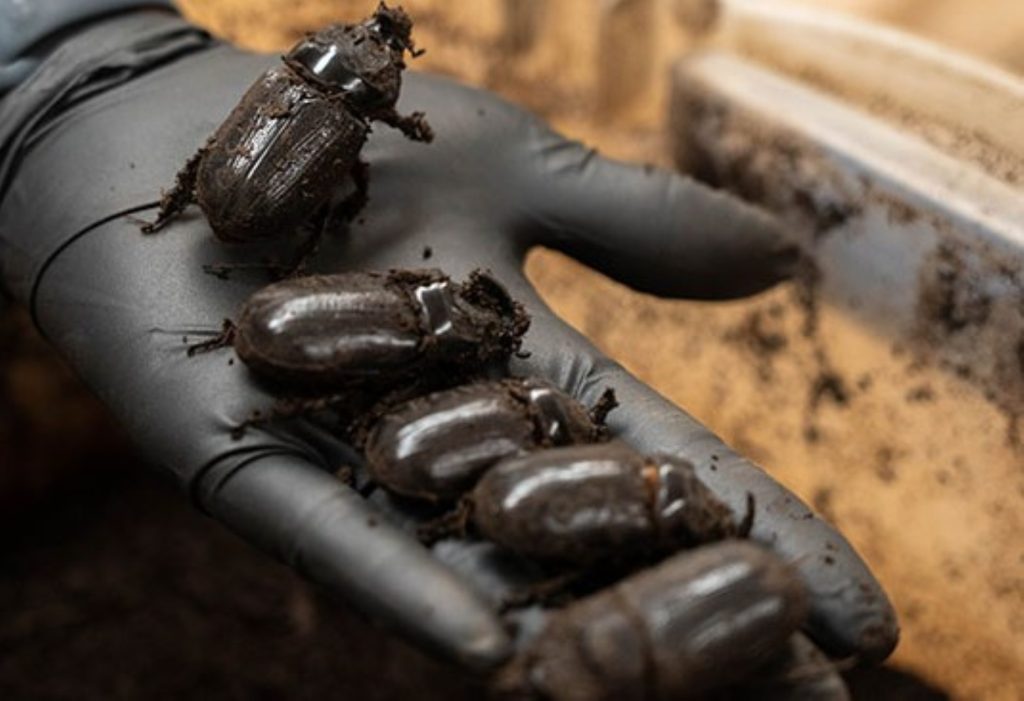
The research trip was part of a close partnership with professor Chris Kitalong and Jacques Idechong of Palau Community College.
The research, led by doctoral student Kristen Gaines, involves infecting coconut rhinoceros beetle larvae to observe how the virus spreads.
Early results are encouraging, showing the virus can kill larvae within 12 to 30 days.
“I sleep a little better at night because Kristen said she’s starting to see larvae getting lethargic and dying after just being exposed to the virus,” Melzer said.
This story was produced by University of Hawaiʻi News and is being shared by Kauaʻi Now. You can read the original story here.