



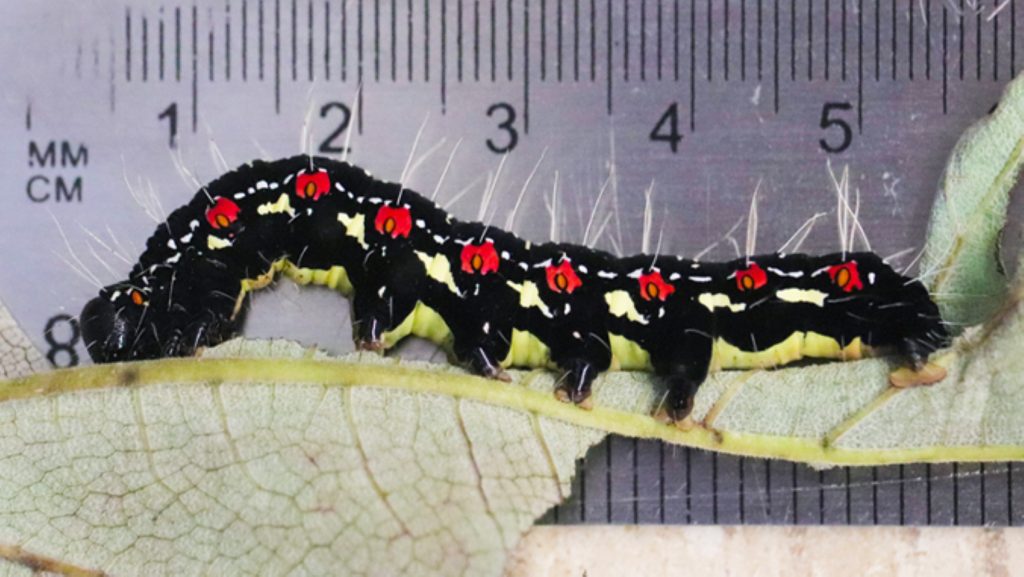
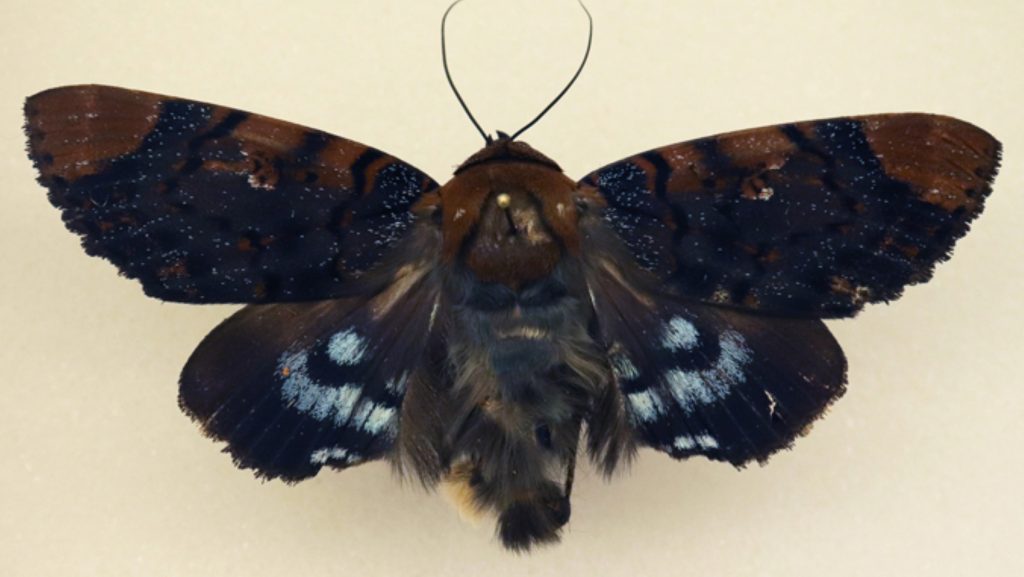
A live ramie moth (Arcte coerula) caterpillar was recently discovered on Kauaʻi, marking the first detection of this invasive species on the Garden Isle.
The discovery — reported by a community member to Kauaʻi Invasive Species Committee — sparked a swift response from University of Hawaiʻi at Mānoa, Hawaiʻi Department of Land and Natural Resources and Hawaiʻi Department of Agriculture and Biosecurity.
Growing threat to native ecosystems
Ramie moth caterpillars are prolific feeders known to quickly defoliate māmaki, a native Hawaiian plant vital to Hawaiʻi forests and culturally significant for its use in lāʻau lapaʻau, or traditional Hawaiian healing practices.
“We are really worried about this because we’ve seen it spread from Maui to the Big Island in 2020, then to Oʻahu in 2024 and now to Kauaʻi,” said University of Hawaiʻi at Mānoa College of Tropical Agriculture and Human Resilience graduate student Michelle Au, who has tracked the invasive pest since 2019.
Au highlighted the broader ecological risk: the caterpillars also feed on other endemic nettles including endangered species such as maʻoloa.
Ramie moths also compete for the same resources with native species such as the Kamehameha butterfly and endangered endemic land snails.
Finding natural predators
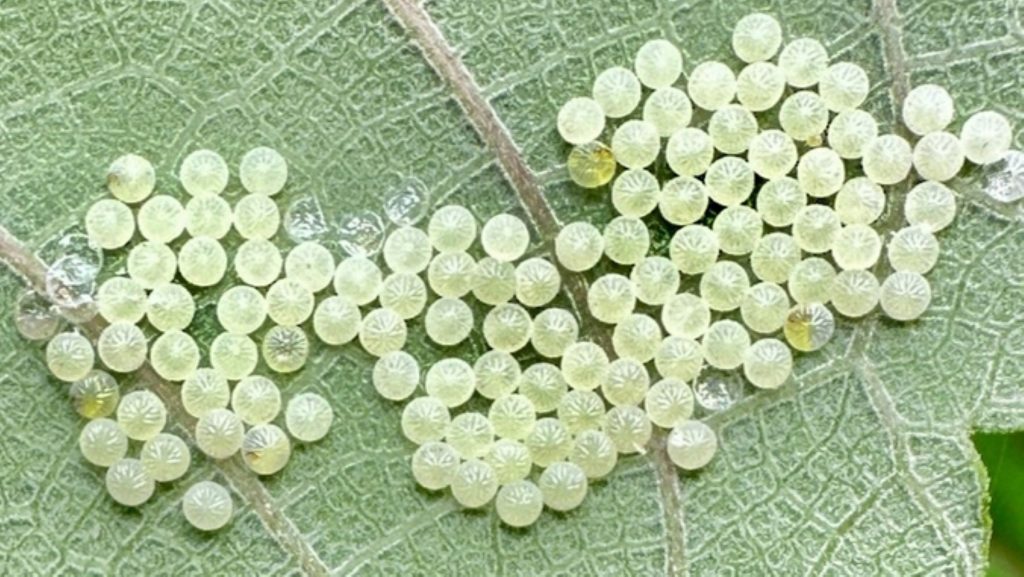
Ramie moth eggs are mostly found individually on the underside of leaves, along the leaf edge or veins. It takes less than a week for eggs to hatch once laid.
Au’s research focuses on the detection of resident natural enemies that could help manage this invasive pest as the moth continues its rapid expansion throughout the islands.
“We’ve been looking for predators and parasitoids already in our environment that may expand its host range and attack the eggs, caterpillars and adults of the ramie moth, helping to manage populations from devastating levels,” Au said.
Her research monitors specimens at various field sites to determine what percentage of ramie moth eggs reach adulthood, which then will lay eggs and inflict future damage.
Community help needed
“I rely heavily on public reports of this pest, especially for new detections,” Au said. “The biggest thing for us right now, especially for Kauaʻi, is to raise awareness in order to track the spread of this pest.”
Officials ask the public to report sightings with photos to 643pest.org or email ipmlab@hawaii.edu.
Visit College of Tropical Agriculture and Human Resilience’s extension page detailing the ramie moth for additional information.
This story was produced by University of Hawai’i News and is being shared by Kaua’i Now. You can read the original story here.