



New research reshapes timeline for one of earliest chapters in human history
A study confirms that Homo erectus, the direct ancestor of modern humans, arrived hundreds of thousands of years earlier than previous studies indicated, rewriting our understanding of early human dispersal in that area.
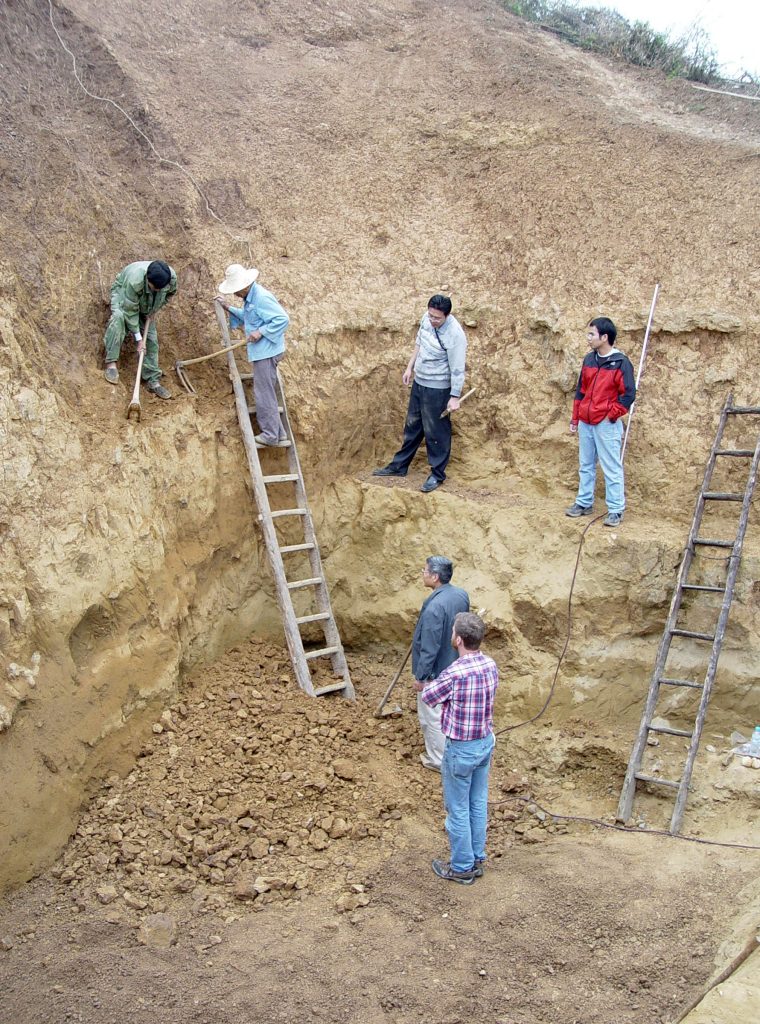
New research by a team of geoscientists and anthropologists, including corresponding author Christopher J. Bae from the University of Hawaiʻi at Mānoa’s Department of Anthropology in the College of Social Sciences, confirms that Homo erectus appeared in Yunxian, China 1.7 million years ago, about 600,000 years earlier than previous studies indicated.
Prior to this study, which was published in “Science Advances” on Feb. 18, the oldest Yunxian Homo erectus fossils were reported to be about 1.1 million years old. This new knowledge reshapes the timeline of one of the earliest chapters of human history by suggesting our ancestors spread across continents earlier—and possibly more successfully—than scientists once believed.
“While Homo erectus, our distant ancestor, is widely recognized to have originated in Africa before dispersing into Eurasia, the precise timeline of its arrival in eastern Asia was unknown,” Bae said. “Using the combination of the Yunxian Homo erectus fossils and burial dating data, we have now been able to create a fairly robust dating reconstruction of when these hominins appeared in eastern Asia.”
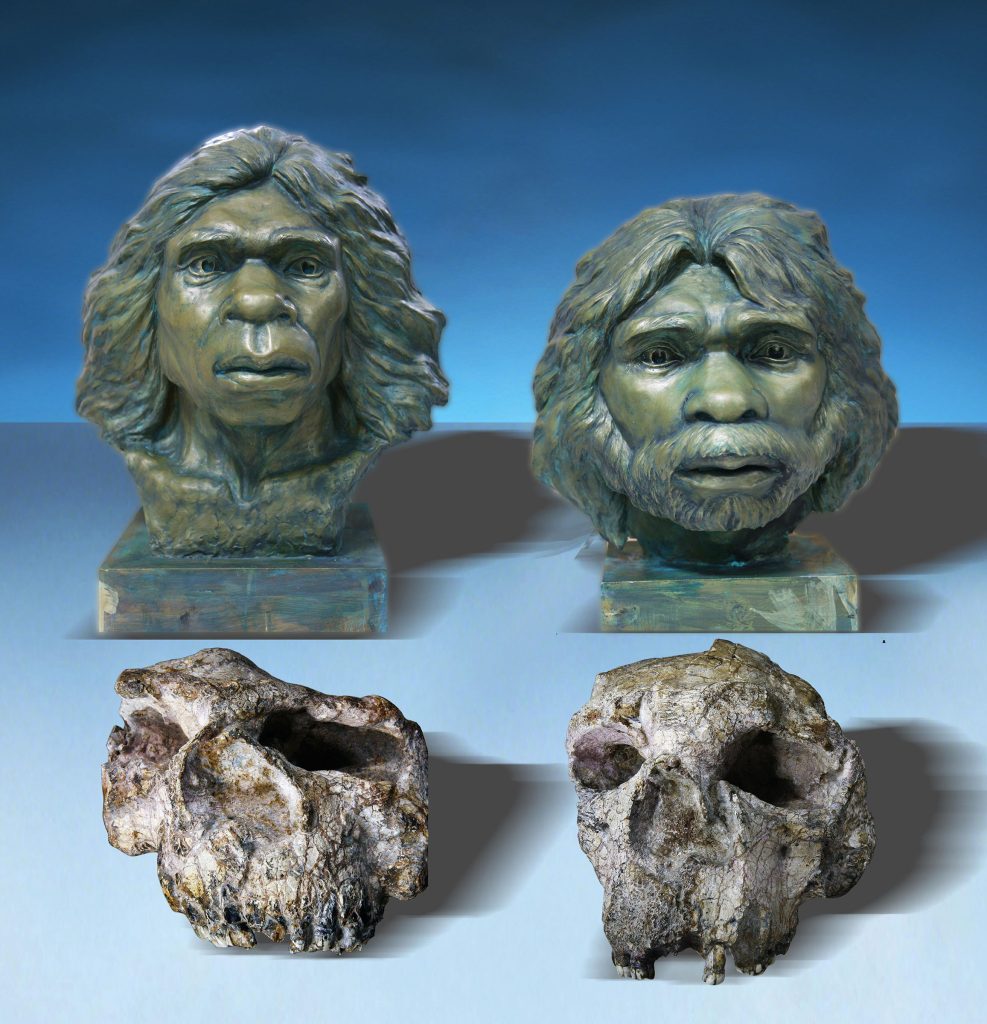
The researchers used aluminum-26 (Al-26) and beryllium-10 (Be-10) burial dating to determine the age of the Yunxian fossils. Hua Tu, lead author, describes the method as using aluminum and beryllium isotopes in sediment from the same stratigraphic level as the fossils to determine when it was first buried and shielded from cosmic radiation.
Tu, from the Institute of Marine Sciences at Shantou University and the College of Geographical Sciences at Nanjing Normal University, explained that Al-26 and Be-10 isotopes are produced when cosmic rays hit quartz minerals. Once buried deeply underground, isotope production stops and radioactive decay takes over.
“By using aluminum’s and beryllium’s known decay rates, and comparing the ratio of the two types of atoms left in sediment samples surrounding a fossil, researchers can calculate how long a fossil has been buried,” Tu said.
Traditional carbon-14 dating is limited to the last 50,000 years, and the Al-26/Be-10 method allows researchers to accurately date materials as far back as 5 million years ago.
“These findings challenge long-held assumptions regarding when the earliest hominins are thought to have moved out of Africa and into Asia. While these results are significant, the mystery of exactly when Homo erectus first appeared and last appeared in the region remains,” Bae said. “If Homo erectus was not the earliest occupant to reach Asia, alternative species must be considered. The updated chronology for Yunxian is a critical step toward resolving these debates.”
The study was funded by the National Natural Science Foundation of China and the U.S. National Science Foundation. In addition to Bae and Tu, other research team members include:
- Xiaobo Feng: School of History and Culture, Shanxi University
- Lan Luo: Department of Physics and Astronomy, Purdue Rare Isotope Measurement Laboratory, Purdue University
- Zhongping Lai: Institute of Marine Sciences, Guangdong Provincial Key Laboratory of Marine Disaster Prediction and Prevention, Shantou University, and Alpine Paleoecology and Human Adaptation Group (ALPHA), State Key Laboratory of Tibetan Plateau Earth System, Environment, and Resources, Institute of Tibetan Plateau Research, Chinese Academy of Sciences
- Darryl Granger: Department of Earth, Atmospheric, and Planetary Sciences, Purdue University
- Guanjun Shen: College of Geographical Sciences, Nanjing Normal University, and Institute of Marine Sciences, Guangdong Provincial Key Laboratory of Marine Disaster Prediction and Prevention, Shantou University
Sponsored Content