



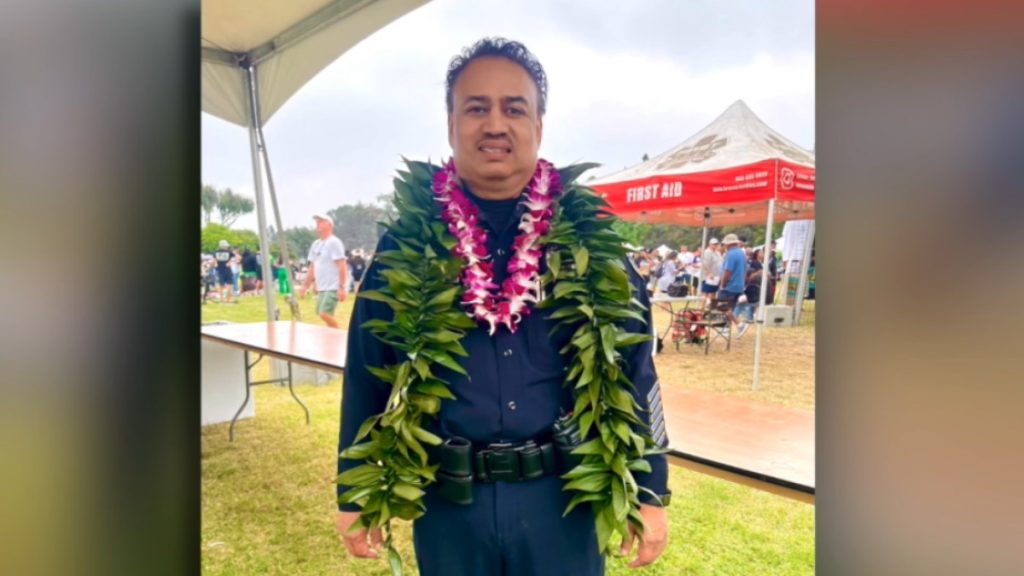
New Kauaʻi Police Chief Rudy Tai’s interest in law enforcement began long ago in Pearl City, Oʻahu, where the mentorship and coaching of local cops inspired him to become a junior police officer at Highlands Elementary. He was just 12 years old.
Tai, who was born and raised on Oʻahu, left Hawaiʻi and ended up serving more than 35 years at one of the nationʻs largest police departments. He retired just last week as deputy chief of the San Diego Police Department at age 60.
Now, Tai’s trading six-lane freeways for two-lane roads and a city skyline for natural beauty as he begins a new chapter in his home state of Hawaiʻi.
“Even though I left Hawaiʻi, the aloha spirit never left me,” Tai told Kauaʻi Now during a recent interview. “I’ve always stayed connected, but it’s been a long time, and I am ready to reconnect.”
There was a bit of serendipity.
“I was coming to the end of my career at San Diego PD, which I really enjoyed, and I had a friend ask me if I was interested in this position,” he said. “The timing just kind of happened to be right for me. I was looking to move back to Hawai’i in one way or another, and once I saw this job opening, I decided to put in for it.”
He said he thought it was a great opportunity to come back and serve the Hawaiian people and the people who live on the Hawaiian Islands.
“I can at least come back and try to make some type of positive impact on the police department there, and the community,” he said.
While most of his family lives on O’ahu, he also has several family members living in Hanalei on the island’s North Shore.
Tai, who is of Hawaiian and Chinese descent, beat out 41 other candidates and three finalists for the Kauaʻi chief job. It became official on Tuesday, with the Kauaʻi Police Commission making him a formal offer after he passed all background checks, and Tai signing the employment contract.
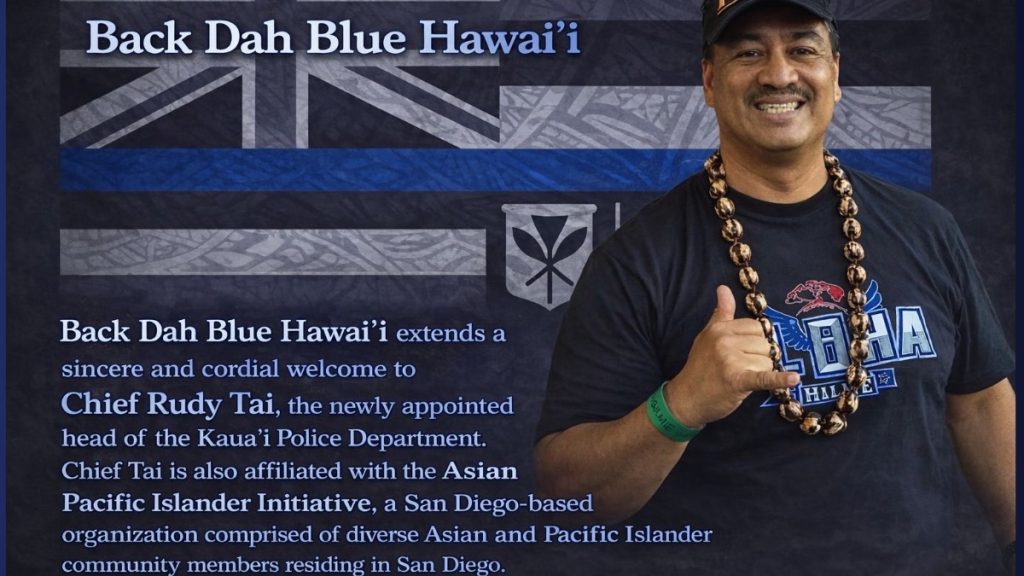
Tai is scheduled to start on March 9, taking over a police department with low morale following a six-year tenure under former chief Todd Raybuck that started out well but went south after he was accused of creating a hostile work environment and violating county discrimination policies that led to a five-day suspension.
Raybuck mocked Asian Americans by bowing his head, squinting his eyes and speaking to other officers with a fake Japanese accent.
That wonʻt happen under Tai. He currently serves as president of the National Association of Asian American Law Enforcement Commanders.
“I expect people to treat people like they want to be treated,” he said. “You go to treat each other with respect, with dignity. We all work in this profession, and I expect people to be professional in doing that.
“There’s no space for discrimination with me or in another department, and if we come across that, I’m gonna deal with it swiftly.”
Tai is going from No. 2 at a “really huge” department of about 1,800 to leading the small Kauaʻi police department of about 135.
Tai said his experience patrolling the nation’s 8th largest city will help “to just bring some new ideas, some new experiences, so we can improve things.”
While serving on the San Diego Police Department, Tai said he “dealt with a lot of critical incidents as well as cross-border issues in Tijuana (Mexico).”
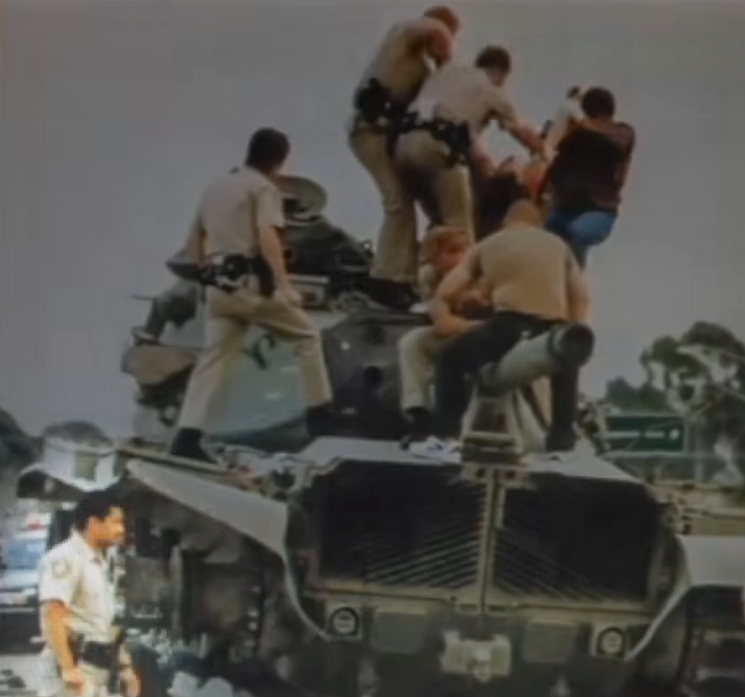
He also was involved in the bizarre case in 1995, when a desperate Army veteran stole a battle tank from a National Guard Armory and led police on a 23-minute, destructive rampage through San Diego’s residential streets and a highway, crushing cars, gushing fire hydrants and light poles before being shot by police.
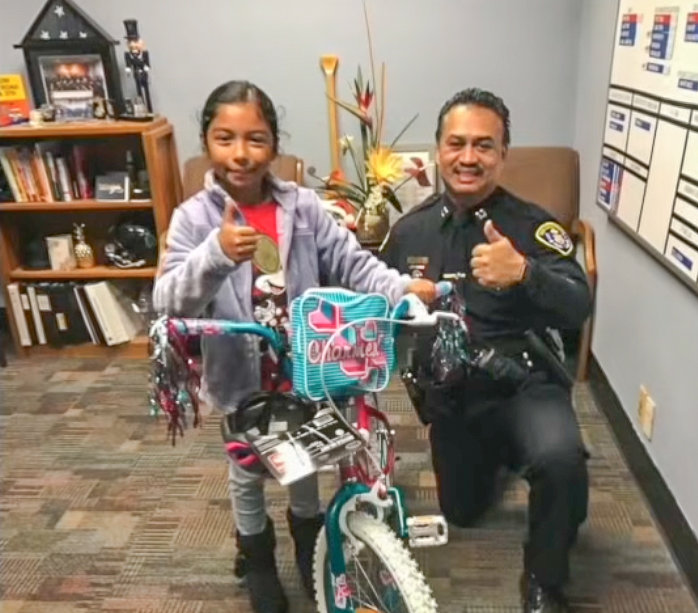
“I have a servant attitude, where I like to give back and serve others,” Tai said. “I always try to go out every day to impact someone in a positive way, and I’d like to share that loyal spirit anyway I can.”
He plans to work to make the Kauaʻi Police Department more efficient and effective.
“You can move some resources from one area to the next, look at the information data, and see that sometimes we can better police by utilizing resources during a certain time, a certain day, to effect change in a specific area.”
Within the department, Tai said he has reviewed the surveys and understands that morale is low.
“My primary goals are to really look at employee morale and meet with every employee, whether it’s individually or as a group, and get some insight, some feedback,” Tai said.
His said his experience overseeing background checks for the recruiting department in San Diego gives him valuable insight into how to restructure the recruiting process in Kauaʻi. The department currently is short 30 officers and facing an upcoming wave of retirements.
“I want to look at different ways on how we can make sure people pass the test without compromising the standard that we have. Little things like waiving a written test if an individual has a 3- or 4-year college degree, instead of waiting a year to be recruited,” he said.
Among his ideas are working on a large scale with the Narcotics Drug Task Force to tackle the island’s drug issues, a senior retention program or bonuses for officers serving more than five or six years in the force, and minor environmental changes such as cameras at intersections and drones to help with solving crimes.
“Things that are minor but effective tools,” Tai said.
He also wants to implement a mentoring program for candidates who want to be officers but maybe were not ready mentally, physically or another reason.
“We can work with them and get them in the right mindset or help them out financially if there are any challenges within their financial background,” he said.
“It might take a year or so for them to clear up their financial background, but just these little things, so that we can prepare them so they can be their best self when they apply.”
He said he wants to make sure that all the employees in the department feel valued and get the resources they need.
“Sometimes all that takes is sitting down and talking with them,” he said. “I’m the type of person who likes to walk around the organization. I don’t like sitting behind a desk. I like getting out in the community. I like meeting people.
“I think it’s so important to have these relationships, because they go a long way.”
Tai has a strong educational background, with a bachelor’s degree in sociology and a master’s degree in management. He is also a graduate of the FBI National Academy.
He explains that he wants to enhance higher education and address future challenges, and establish a lasting legacy for the department. He said he is always looking for ways to create “future leaders’ succession planning.”
He also wants to develop a department-wide mentoring program with officers to identify the aspirations of police recruits all the way up to the deputy chief. Such as what do they want to do? How far do they want to go? What’s out there for them?
The purpose is to put the recruits or officers on the path they want and then provide them with what they need, including higher education or training.
“Figure out a path so we can start thinking of the next 45 years or next 10 years of who’s going to replace me? And who are our next leaders on Kaua’i to ensure that we have and continue that legacy,” Tai said.
He aims to create a community environment built on trust between residents and officers, where everyone is accessible and approachable.
“I truly believe in ʻohana and respect and responsibility and treating people right, and I’ve learned that from growing up in Hawai’i, nowhere else, you know,” he said. “And that stayed with me, and with my internal life and into this career.”
He said he understands from his experience in San Diego that when the police are around everyone assumes the worst.
“I don’t want people to think that way in Kaua’i. I want people to welcome us, just like we welcome them, and if they have any issues, they can stop by at any time if I’m grabbing some coffee or just out and about.”
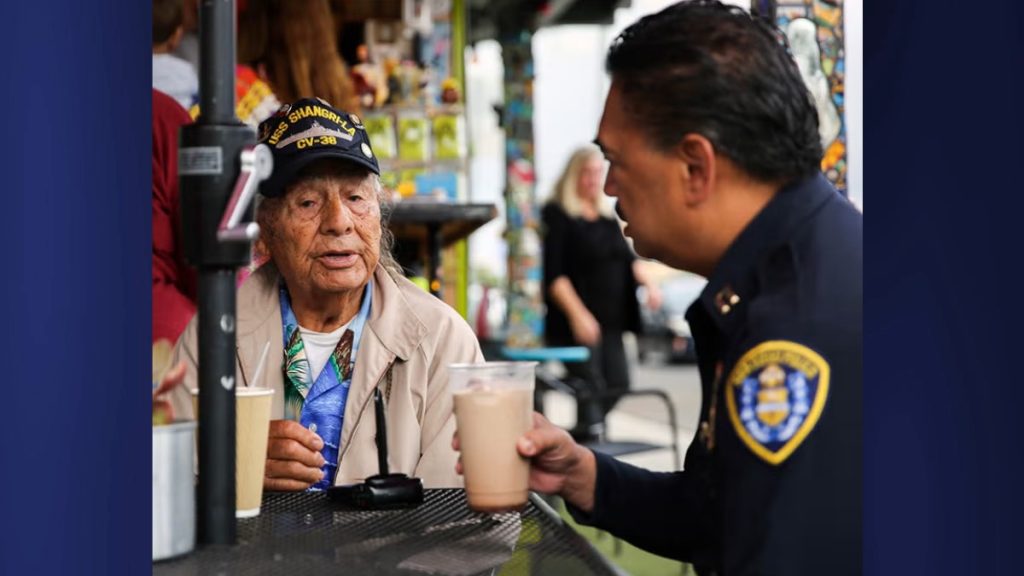
He grew up in the community policing era, with a philosophy that it’s a shared responsibility for public safety.
“So let’s talk about community neighborhood watches, involve our youth, and get them excited about a career in law enforcement,” he said. “It takes a special person to be an officer, but you got to treat people with dignity and respect, whether they’re a victim, suspect, it doesn’t matter. And we have to make sure that we protect our community as best as we can.”