



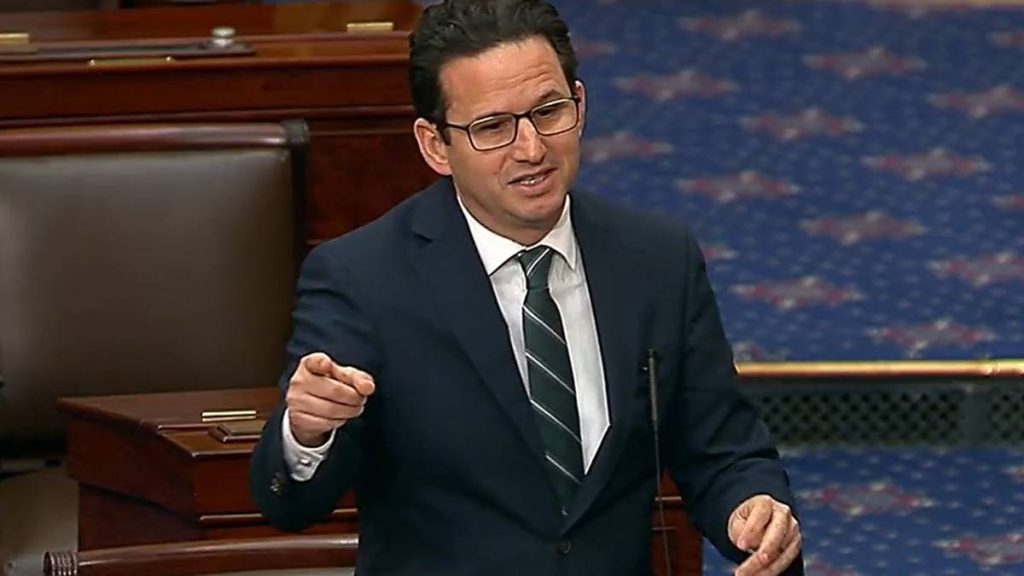
The U.S. Senate on Jan. 30 approved a bipartisan appropriations agreement that includes hundreds of millions of dollars in federal funding for programs benefiting Hawaiʻi, said U.S. Sen. Brian Schatz (D-HI).
Schatz, a senior member of the Senate Appropriations Committee, said in a press release that despite the tough politics over federal funding in Washington, hundreds of millions of dollars were secured for Hawai‘i in the Consolidated Appropriations Act 2026.
“The new funding will improve our roads and infrastructure, and provide people with health care, housing and other essential services,” he said.
The measure builds on an earlier agreement that directed millions of dollars to Hawaiʻi for initiatives such as clean energy development, Native Hawaiian arts and culture, and wildlife protection.
As part of the negotiations to try to avoid a long government shutdown, new appropriations for the Department of Homeland Security were separated from the package while lawmakers continue discussions over proposed changes to immigration enforcement policies.
On Tuesday morning, the U.S. House of Representatives also passed the roughly $1.2 trillion spending package to end the partial government shutdown.
Now the measure goes to President Donald Trump.
Funding highlights for Hawaiʻi, provided by Schatz’ office:
Native Hawaiian Health – $27 million: Native Hawaiian Health Care Systems, as part of the Native Hawaiian Health Care Program, provide critical access to health education, promotion, disease prevention, and basic primary care services for thousands of Native Hawaiians. This funding will support five health centers on Hawai‘i Island, Kaua‘i, Moloka‘i, Maui, O‘ahu and Papa Ola Lōkahi.
Native Hawaiian Housing – $22.3 million: As Vice Chair of the Senate Committee on Indian Affairs, Schatz worked to secure funding for the Native Hawaiian Housing Block Grant Program, which provides financial assistance for Native Hawaiian families to obtain new homes, make renovations, build community facilities, and receive housing services, including counseling, financial literacy, and other critical resources to address housing disparities.
Native Hawaiian Education – $46 million: This includes $10 million for facility construction, renovation and modernization. This funding also supports programs that strengthen Native Hawaiian culture, improve levels of educational attainment, and enhance family and community involvement in education. Schatz included a provision to allow funds to be used for the construction, renovation and modernization of public schools that predominantly serve Native Hawaiian students.
Native Hawaiian and Alaska Native-Serving Institutions – $25 million: This is a $300,000 increase from last year for Hawai‘i and Alaska. The funding provides competitive grants to Native Hawaiian-serving institutions to carry out education, applied research and community development programs. The bill also provides new authorities to allow for construction and maintenance in classrooms, libraries, laboratories and other instructional facilities.
Community Health Centers – $6.5 billion nationwide: This is a $300 million increase from last year. The bill provides continued funding for 14 of Hawai‘i’s federally qualified community health centers, which provide high-quality, affordable primary and preventive care, dental, behavioral health, pharmacy, vision and complementary services to rural and medically underserved communities.
Telehealth – $45.5 million nationwide: This is a $3.5 million increase from last year. The Office for the Advancement of Telehealth is the major federal office dedicated to strengthening access to telehealth, including building the evidence base, supporting states as they develop infrastructure and regulations, promoting access, and providing direct technical assistance, including funding for telehealth programs in Hawai‘i.
Native Hawaiian Resource Center on Domestic Violence – $2 million: The Domestic Violence Resource Network, funded through the U.S. Department of Health and Human Services, will fund a state resource center dedicated to reducing disparities and strengthening domestic violence intervention and prevention efforts for Native Hawaiians.
Center for Indigenous Innovation and Health – $6 million: This is a $2 million increase from last year (for Hawai‘i and Oklahoma). The funding will support the University of Hawai‘i’s Center for Indigenous Innovation and Health, which is dedicated to advancing ancestral practices as a means to improve health in Native Hawaiian and Pacific Islander communities.
Housing and Community Development – more than $3 billion nationwide: Hawai‘i faces a critical housing shortage and this bill supports programs that will help Hawai‘i build more housing. Specifically, the bill includes:
“Yes In My Back Yard” grant funding – $50 million: This is a program Schatz created to incentivize state and local governments to change their zoning and land use laws and regulations that often unfairly limit the amount of housing that can be built where it’s needed.
Bus and Transit – $16.6 billion nationwide: This funding is distributed among the states and counties for the operation and capital costs associated with the operation of public transit systems, including the Maui Bus, TheBus, Kaua‘i Bus, Hele-On Bus and The Handi-Van fleets.
Highways and Bridges – $64.3 billion nationwide: The funding is distributed from the Highway Trust Fund to states for highway maintenance and new construction of bridges, roads, and bike and pedestrian paths.
Air Traffic Control and FAA – $13.7 billion nationwide: This funding will support the hiring and training of controllers, helping maintain the 2,500 air traffic controller hiring goal and keep air travel safe.
Homelessness Assistance – $4.4 billion nationwide: This is a $366 million increase. Homelessness assistance programs provide funding to states and local governments and nonprofit providers to serve people across the country who are affected by homelessness.
Child Care – $8.8 billion nationwide: This is an $85 million increase. The Child Care Development Block Grant provides subsidies for 1,900 children under six in Hawai‘i to access high quality child care.
Head Start – $12.4 billion nationwide: This is an $85 million increase. Head Start provides high-quality, comprehensive early childhood development services to nearly 3,000 young children in Hawai‘i.
National Hansen’s Disease Program – $1.9 million: The funding is solely awarded to Hawai‘i for the care and treatment of patients with Hansen’s disease. Though Hansen’s disease is rare and treatable, Hawai‘i has among the highest prevalence in the country. This funding supports the Hawai‘i Department of Health to provide treatment for patients living in Kalaupapa and on O‘ahu.
Native Hawaiian and Pacific Islander Health Research – $5 million: This is a $1 million increase. The funding advances a new health research office Schatz established at the National Institute of Minority Health and Health Disparities to support research, training and community engagement that promote and improve the health of NHPI communities.
Native American Language Resource Center – $2.4 million nationwide: This funding will continue to support the establishment of a Native American Language Resource Center to provide best practices and curricula development on Native American language education, including ʻŌlelo Hawai‘i. Schatz’s Native American Language Resource Center Act was signed into law in 2022.
Technology-Enabled Collaborative Learning – $8.5 million nationwide: The bill funds programs under Schatz’s ECHO Act to promote technology-enabled collaborative learning and capacity building to help clinicians provide expert-level care to patients wherever they live, increasing access to specialty treatment in rural and underserved areas.
Job Corps – $1.8 billion nationwide: This funding provides a residential career training program to help younger workers complete their high school education, train them for meaningful careers, and assist them in obtaining employment.
DoD Impact Aid – $70 million nationwide: The DoD Impact Aid and Aid for Children with Disabilities programs provide assistance to 82 public school districts nationwide that educate 170,000 children of military personnel.
Pacific Disaster Center – $3 million: The center was established in 1992 after Hurricane Iniki to ensure the state had the best science and technology to support lifesaving decision-making for our island communities throughout the Pacific and beyond. PDC acts as a crucial integrator of information, data and news to allow the U.S. Indo-Pacific Command and other national security leadership to be able to make informed decisions on developing crises. The breath of information that PDC can provide, collected across various news sources, data sets and expertise can be integrated with the information national security leaders have to ensure they can respond to a crisis, like a tsunami or earthquake, with the best information available to save lives.
Additional Highlights Include:
Native Hawaiian Child Care: The deal includes a provision to improve oversight of the Administration for Children and Families’ $1 million cap on the Native Hawaiian Non-Profit Organization Child Care Grant.
Airspace Modernization: The funding package includes a measure directing the Federal Aviation Administration to advance the Hawai‘i airspace modernization project, which will enable Air Traffic Control upgrades, faster inter-island flights, fewer flight delays and cancellations, and more reliable air service.
Prepositioning Response Medical Caches in Hawai‘i: The bill directs the Administration for Strategic Preparedness and Response to preposition emergency medical resources in Hawai‘i to mitigate risks during disrupted transportation networks, communications and supply chains.
Native Hawaiian and Pacific Islander National Health Interview Survey: The bill includes language to ensure the inclusion of Native Hawaiian and Pacific Islanders in the annual National Health Interview Study that is used to measure and report the state of Americans’ health and the distribution of public health resources.
U.S. Department of Education: The bipartisan bill rejects the Trump Administration’s efforts to eliminate the Department, including new prohibitions on transfer of funding to other federal agencies unless authority is provided, and requirements to maintain staffing levels to fulfill statutory responsibilities.
Post Office Preservation: The deal includes a provision language preventing the closure of small rural and other small post offices.
Editor’s Note: This story has been updated with the the news today that the U.S. House of Representatives passed the appropriations bill.