



“Volcano Watch” is a weekly article and activity update written by U.S. Geological Survey Hawaiian Volcano Observatory scientists and affiliates.
It was a day of raining rocks this past Saturday on the Big Island.
Large lava fountains erupted from the north and south vents Jan. 24 within Halemaʻumaʻu Crater — reaching heights of at least 1,475 feet — during Episode 41 of the ongoing episodic eruption at Kīlauea’s summit.
Strong updrafts coupled with light winds blowing to the east and north sent lava fragments — called tephra — from those molten rock geysers over much of Puna, into Hilo and along the eastern edge of Kaʻū.
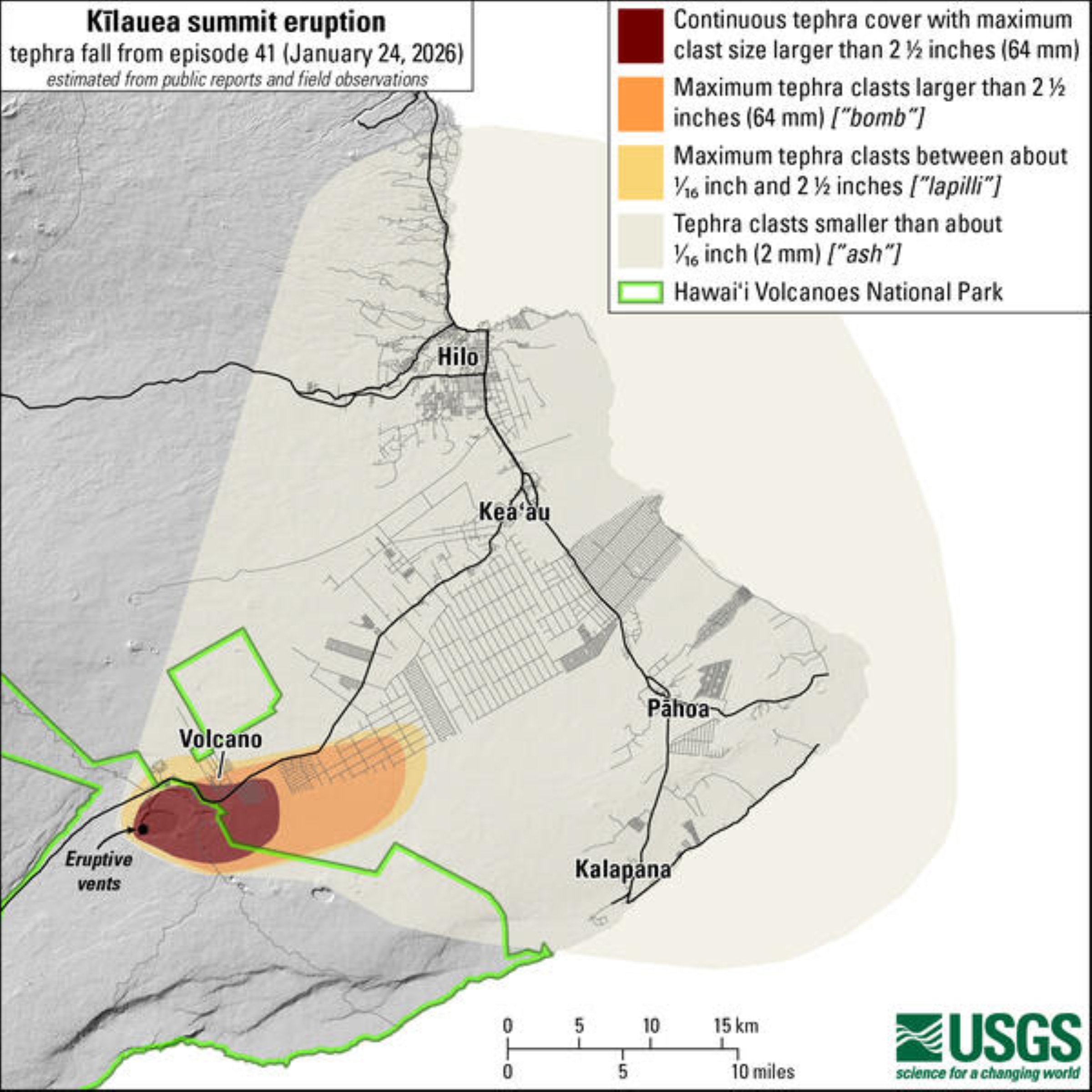
Tephra fallout was densest within 5 miles east-northeast of the active eruptive vents.
A thick tephra layer covered the volcano’s summit region inside Hawaiʻi Volcanoes National Park, as well as parts Volcano Village and Mauna Loa Estates adjacent to the park.
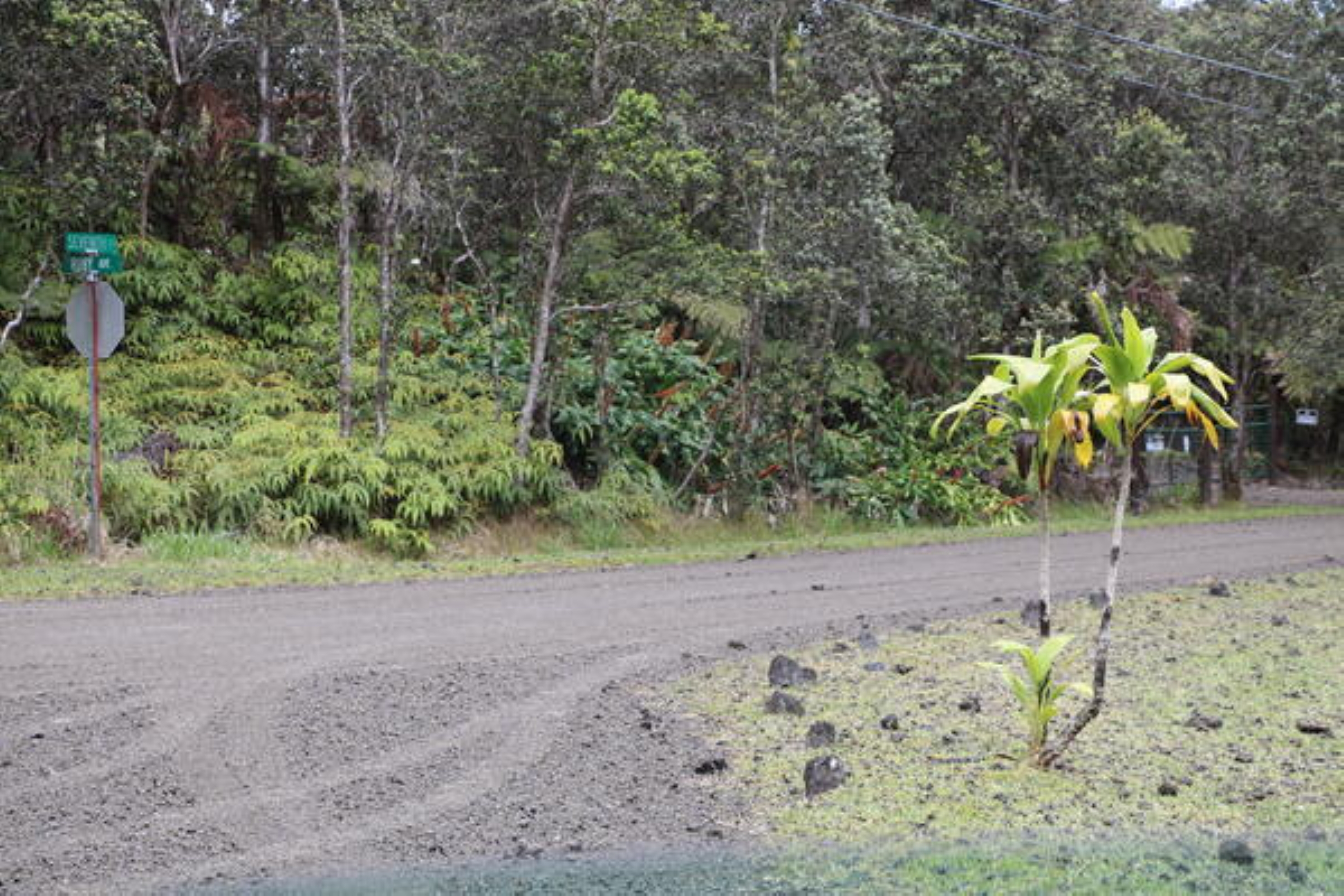
The ground in those areas was completely or nearly completely blanketed with tephra — so thick in areas that road markings became invisible to drivers.
Tephra fragments ranged in size from small strands of Pele’s hair to larger pieces of frothy and lightweight reticulite up to a foot in diameter.
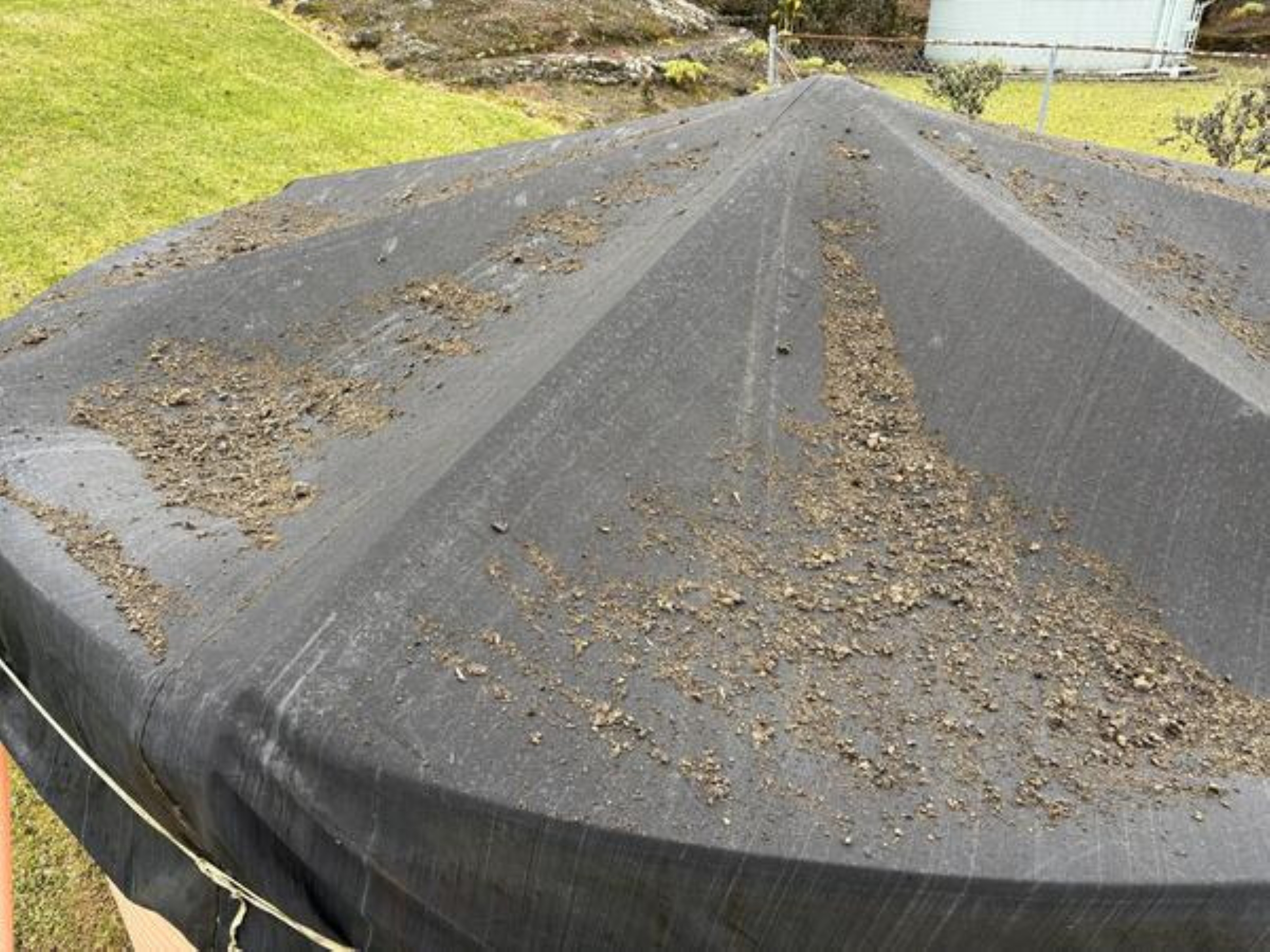
They cooled quickly traveling through the air. Many broke or shattered upon impact with hard surfaces. Others drifted down and landed intact on softer surfaces — such as grass — while some remain suspended in the branches of trees and ferns.
Parts of Volcano Golf Course and the surrounding community, ʻŌhiʻa Estates, Royal Hawaiian Estates and Fern Forest farther away received tephra fall ranging from Pele’s hair and ash to pieces of reticulite that were up to several inches in diameter.
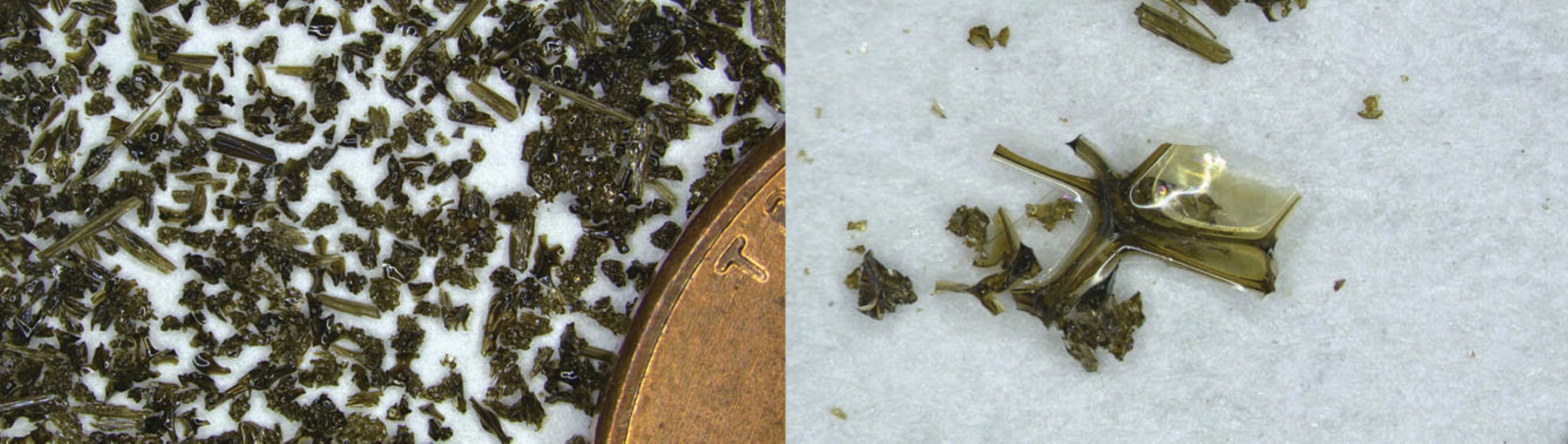
Communities still even farther away than that — in coastal areas of Puna, plus parts of Hilo and Kaʻū — saw light fall or a dusting of fine-grained ash and Pele’s hair, extending from Pepe‘ekeo to Kalapana.
What made Episode 41 so different from its 40 predecessors?
Several past episodes had lava fountains reaching similar heights, but never from both vents at the same time, and most past episodes erupted during trade wind conditions.
Trade winds blow from northeast to southwest. When there are lava fountaining episodes at the Kīlauea summit during trade winds, tephra is transported to the southwest.
Much of the larger pieces land in the closed area of Hawaiʻi Volcanoes National Park, but communities in Kaʻū — including Pāhala, Nāʻālehu and Ocean View — experienced ash and Pele’s hair falling on them several times.
There were no trade winds during Episode 41.
Winds at ground level were weak. As the dual high fountains erupted large volumes of lava, they released an immense amount of heat that rose upward, lofting tephra material formed by the lava geysers.
Lightweight clasts also encountered stronger winds blowing to the east and northeast at upper levels, transporting them in those direction.
Tephra landed on Highway 11 as vehicles were driving on it, creating hazardous conditions. The highway was temporarily closed from two locations on either side of the entrance to Hawaiʻi Volcanoes National Park.
Hawaiʻi Volcanoes National Park visitors were pelted by falling tephra as rangers temporarily closed public overlooks around the caldera.
Episode 41 started at 11:10 a.m. Jan. 24, and the most intense period of tephra fall happened in the hours immediately after it started. Lighter tephra fall continued until the episode ended at just before 7:30 p.m., more than 8 hours after it began.
Cleanup efforts on roadways and roofs have been underway in the days since.
Hawaiʻi County Civil Defense Agency has numerous resources available to affected residents.
Has a tephra fall event like this happened before in Hawaiʻi?
Yes. Lava fountaining episodes in January and March 2025 deposited Pele’s hair in communities around Kīlauea summit.
More than 40 years ago, the Puʻuʻōʻō vent on the East Rift Zone of Kīlauea erupted its 30th episode of lava fountaining Feb. 4, 1985. Tephra up to several inches in diameter fell in Hawaiian Acres and Pele’s hair fell as far away as Hilo.
What do episodes in January/March 2025 and Episode 41 of the ongoing summit eruption have in common with Episode 30 of the Puʻuʻōʻō eruption?
They all occurred during winter — a time of year when we do not reliably have trade winds in Hawaiʻi.
What is important to remember moving forward?
The episodic eruption at the summit of Kīlauea is not finished. Episode 42 is forecast between Feb. 9 and 20.
A combination of fountaining dynamics and wind conditions determines where tephra fall might occur for any given episode of this eruption.
* * * * * * * * *
VOLCANO ACTIVITY UPDATES
KĪLAUEA
VOLCANO ALERT LEVEL: Watch
Kīlauea’s ongoing episodic summit eruption began Dec. 23, 2024. Episode 41 lava fountaining lasted just more than 8 hours Jan. 24. Elevated micro-seismicity has continued intermittently in the summit region since the end of Episode 40.
No unusual activity has been noted along Kīlauea’s East Rift Zone or Southwest Rift Zone.
WHAT’S NEXT? Summit region inflation since the end of Episode 41 indicates another lava fountaining episode is possible and could erupt between Feb. 9 and 20.
MAUNA LOA
VOLCANO ALERT LEVEL: Normal.
Mauna Loa is not erupting.
Hawaiian Volcano Observatory continues to closely monitor Kīlauea and Mauna Loa.
* * * * * * * * *
EARTHQUAKES
Three earthquakes were reported felt in the Hawaiian Islands during the past week:
- MAGNITUDE-3.5 at 2:52 p.m. Jan. 28 located just north of Pāhala at a depth of 18 miles.
- MAGNITUDE-1.7 at 11:48 p.m. Jan. 26 located 8 miles south of Volcano Village at a depth of 18 miles.
- MAGNITUDE-4.2 at 11:37 p.m. Jan. 26 located 1 mile northwest of Pāhala at a depth of 20 miles.
Visit the Hawaiian Volcano Observatory website website for past “Volcano Watch” articles, Kīlauea and Mauna Loa updates, volcano photos, maps, recent earthquake information and more. Email questions to askHVO@usgs.gov.