



University of Hawaiʻi at Mānoa researchers are part of a team recently awarded a 3-year, $5 million grant from the National Science Foundation to address the environmental and public health impacts of outdated wastewater infrastructure in island communities.
The Honu Hub project seeks to ease the burden of households having to pay between $30,000 to $50,000 for the replacement of cesspools with approved wastewater systems.
It is developing a solar-powered, compact and certifiable cesspool alternative that protects human health and the environment.
The project is led by University of South Florida, with University of Hawaiʻi at Mānoa researchers taking charge of the design and real-world pilot demonstration of nutrient capture systems.
An estimated 83,000 cesspools discharge about 52 million gallons of untreated wastewater into the ground each day in Hawaiʻi alone, contaminating coastal waters and damaging coral reefs.
Honu Hub systems are energy-independent and equipped with remote monitoring and automation, making them suitable for cesspool replacement in low-density and isolated areas. The project represents a new class of small, adaptive and decentralized wastewater infrastructure.
Researchers ensure — by centering the work in Hawaiʻi — that the technology is designed to overcome local challenges, including poor soils, high water tables and saltwater intrusion.
The goal is to create a solution that can be adopted throughout the U.S. Pacific region and mainland.
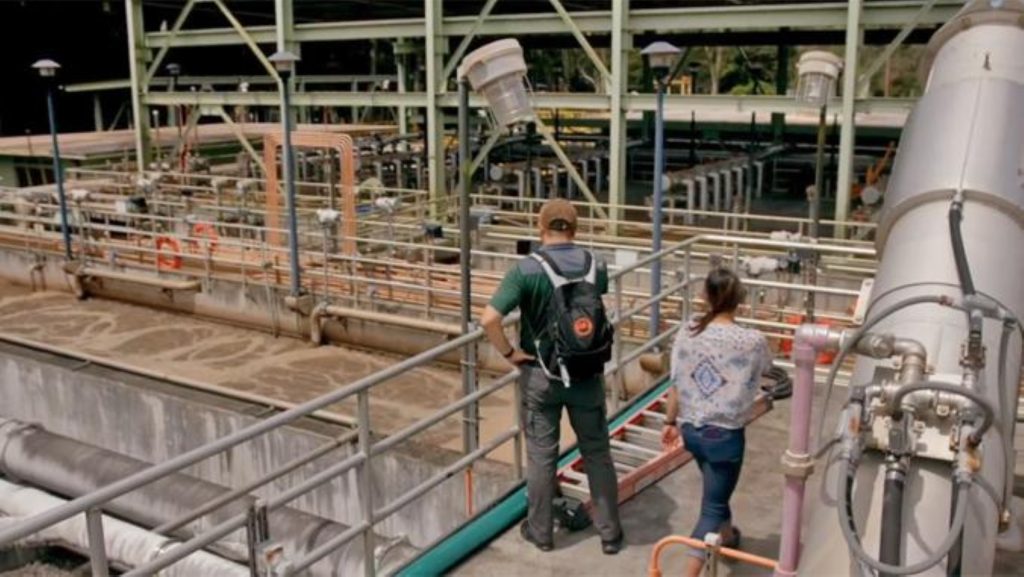
Pilot testing is taking place at the Wahiawā Wastewater Treatment Plant, in collaboration with the City and County of Honolulu.
The National Science Foundation grant award supports the Honu Hub project within the foundation’s Convergence Accelerator program aimed at developing adaptive, decentralized wastewater infrastructure solutions for island and rural communities facing severe sanitation challenges.
Zhiyue Wang will assist with the pilot testing of Honu Hub in Hawaiʻi and developing novel technologies for nutrient recovery in the system.
Wang is project co-principal investigator and an assistant professor at University of Hawaiʻi at Mānoa’s Water Resources Research Center and Department of Civil, Environmental and Construction Engineering in the College of Engineering.
“Collaborating with the University of South Florida, our goal is to empower communities with solutions that protect public health, preserve our nearshore ecosystems and ensure clean water for future generations,” said Wang in an announcement about the grant award.
Water Resources Research Center Director Tao Yan is also part of the Honu Hub research team.
Wang is working alongside principal investigator Daniel Yeh with University of South Florida), co-principal investigator Stuart Coleman with Wastewater Alternatives and Innovations and co-principal investigator Allan Smith of Swiftwater Solutions.