



Around 400 Kaua’i middle schoolers competed in the island-wide Makahiki games this season at Kaua‘i Community College, where students from Kawaikini New Century Public Charter School emerged as the victors.
The traditional Hawaiian sporting events took place on Friday. Kumano I Ke Ala Executive Director Kaina Makua said the games are for everyone, and they bring the community together.
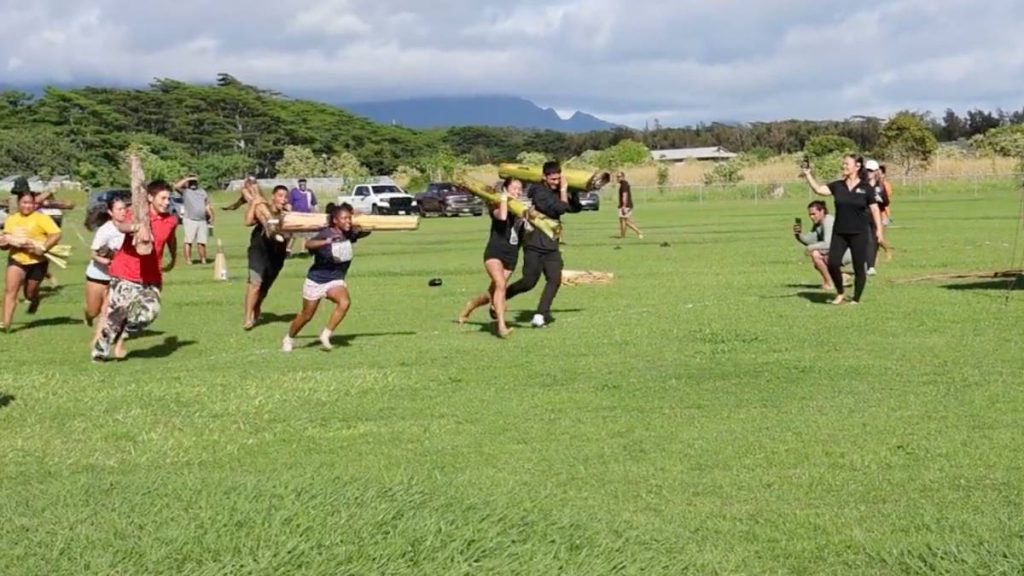
“In Makahiki games, you can be at any ability level, and you gon find one place in Makahiki,” Makua said.
Makua said this is the second championship held on Kauaʻi, and it’s been 20 years in the making.
“I see this as a wake-up and a time where our decision makers really got to think about what our youth need,” Makua said. “Everybody is trying to find their place. You don’t have to be Hawaiian fo play Makahiki. You don’t have to be Hawaiian to be accepted in Hawai’i, you just got to buy into what Hawai’i get.”
Students from Waimea Canyon, Ke Kula Ni‘ihau O Kekaha, Kula Aupuni Ni‘ihau A Kahelelani Aloha Public Charter School, Chiefess Kamakahelei, Hawaiian Technology Academy, Kapa’a, Kanuikapono, Island School, Kawaikini, Alaka’i O Kaua’i, Namahana Public Charter School, and Kanu o ka ʻĀina competed in games such as kōnane ( a two-player strategy game similar to checkers), hukihuki (Hawaiian tug-of-war), and haka moa (standing chicken fights).
Director of Hawaiian culture-based education at Island School, Kanana Kuhaulua, said she teaches her students that the quickest way to get rid of a culture is to get rid of a language, which is why cultural events like this are so vital to the revitalization of Hawaiian culture.
“We see where we’re at in revitalization is that events like this are so important because they remind us that our culture is thriving and alive,” Kuhaulua said. “Seeing the importance of pilina and being proud of our culture for all of our students, even if they aren’t Hawaiian is so important. Hawaiʻi is our home. I try to remind them that it is all of our kuleana to know this land that nourishes them, and without events like this, I think they sometimes forget how connected we are, especially here on Kauaʻi.”