



University of Hawaiʻi Cancer Center researchers found in laboratory and animal models that when breast cancers stop responding to a first antibody-drug treatment, changing the type of drug attached to the antibody can bring the treatment effect back.
The findings were presented Dec. 10 at the prestigious San Antonio Breast Cancer Symposium. The San Antonio, Texas, symposium is considered the largest breast-cancer research meeting in the world.
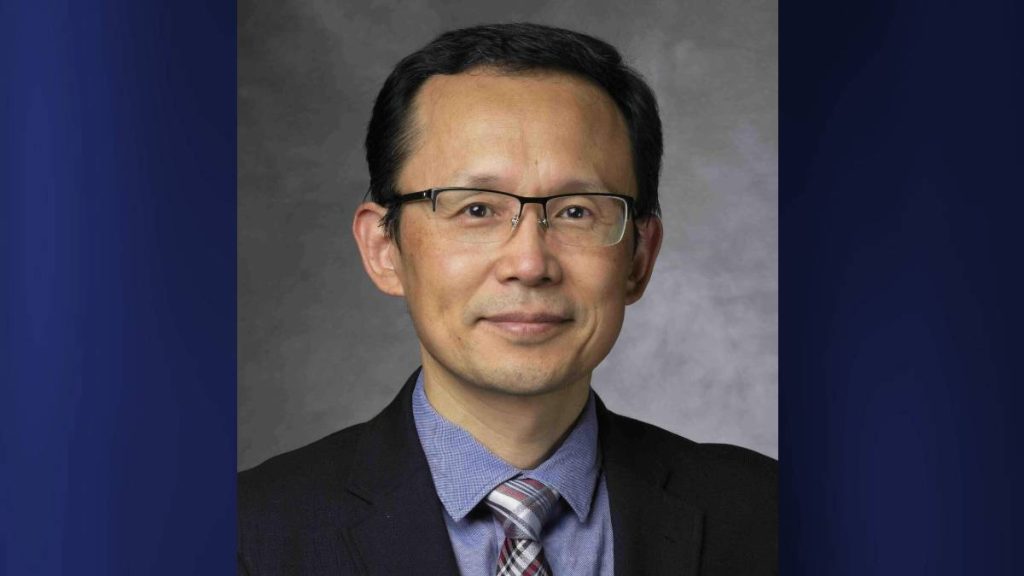
 Jangsoon “Jason” Lee
- Naoto T. Ueno



University of Hawaiʻi Cancer Center research team members built breast cancer models that became resistant to two widely used antibody-drug conjugates, then tested follow-on antibody-drug conjugates that carried a different type of drug.
This switch restored activity in lab dishes and mouse studies, supporting a practical drug-switching strategy after resistance.
The findings offer clinicians a practical way to choose the next antibody-drug conjugate treatment after progression.
An antibody-drug conjugate is a type of cancer treatment that works like a guided missile. Every antibody-drug conjugate has two important parts.
One is an antibody that can find cancer cells by recognizing a unique marker on their surface — almost like a lock-and-key match. The second is a very strong anti-cancer drug. The antibody carries this drug through the bloodstream and delivers it directly into the cancer cell.
Because the treatment is guided to cancer cells, it can attack the tumor more precisely and reduce the amount of medicine that reaches healthy tissues.
Once the antibody-drug conjugate attaches to its target on the cancer cell, the whole package is pulled inside, and the drug is released where it can do the most damage to the cancer.
However, several approved breast cancer antibody-drug conjugates use the same kind of drug — a DNA-targeting drug, topoisomerase I inhibitor.
The treatment is not very effective when these drugs are used in sequence in patients with metastatic breast cancer.
University of Hawaiʻi Cancer Center researchers found in a preclinical setting that this similarity can lead to cross-resistance. Crucially, switching to a different kind of cancer drug — a cell-division-blocking drug — combined to an antibody restored tumor control in resistant models.
“A simple takeaway is this: After a cancer progresses on one [antibody-drug conjugate], choose the next [antibody-drug conjugate] with a different kind of drug,” said associate professor and Director of the Preclinical Core at University of Hawaiʻi Cancer Center Jangsoon “Jason” Lee in a release about the new findings. “This drug-guided approach could help these smart treatments work longer for patients.”
Why it matters
- Rising use, hard choices: Antibody-drug conjugates are being used in metastatic breast cancer care, but doctors have little evidence to guide which second antibody-drug conjugate to use when the first stops working. Real-world reports suggest the second antibody-drug conjugate often helps less if it uses the same drug type as the first.
- New insight: In lab models of both Human Epidermal growth factor Receptor 2-positive and triple-negative breast cancer, switching from a DNA-targeting drug to a cell-division–blocking drug restored tumor control — even though the tumors still displayed the same surface marker the antibody uses to find them. In plain terms, the problem wasn’t the antibody locating and entering the cancer cell, it was that the original drug type stopped working. Changing the drug type made the antibody-drug conjugate treatment effective again.
“These findings by our University of Hawai‘i Cancer Center research team show that drug resistance is not necessarily the end of the line for cancer patients,” said University of Hawai‘i Cancer Center Director Dr. Naoto T. Ueno in the release. “Choosing the right kind of drug next could help more patients benefit from [antibody-drug conjugates].”
University of Hawai‘i Cancer Center researchers are now working with clinical partners to design studies that match the next antibody-drug conjugate’s drug to how a patient’s tumor becomes resistant, aiming for longer-lasting benefit.