



The eruption of Kilauea over the weekend delivered a dramatic casualty.
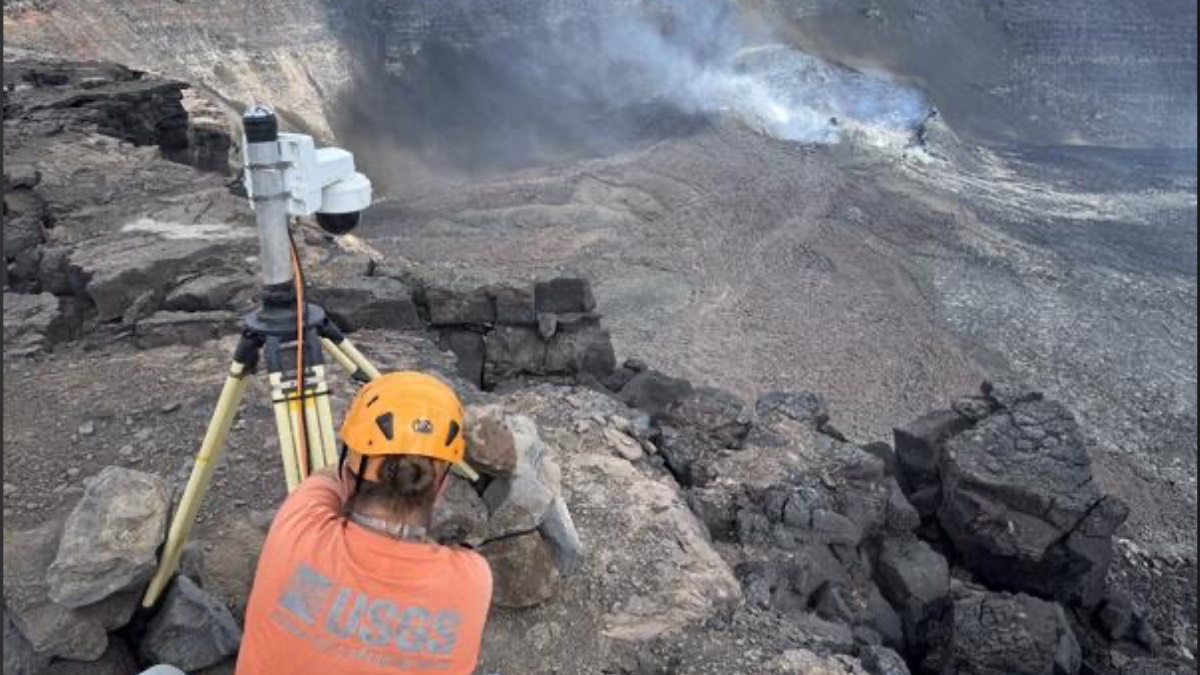
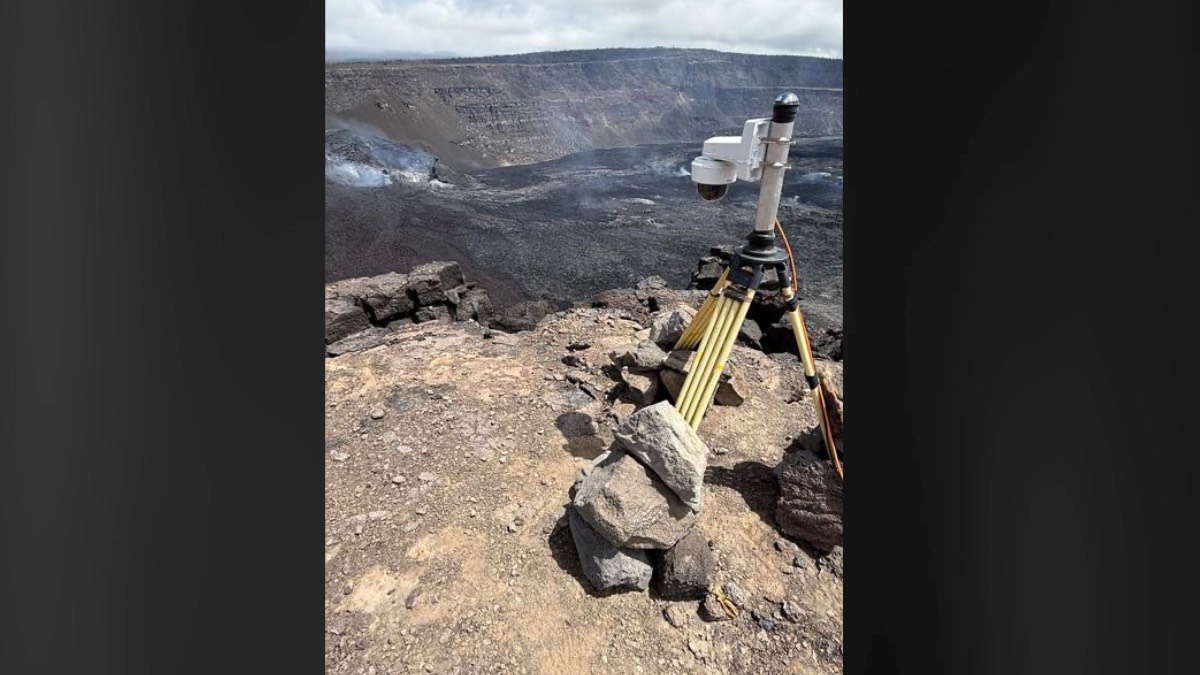
As Episode 38 of the ongoing eruption sent fountains of lava and a plume more than 20,000 feet into the air, the widely viewed V3 summit camera was buried under roughly 50 feet of volcanic debris.
U.S. Geological Survey geologist Katie Mulliken of the Hawaiian Volcano Observatory said the camera, positioned inside a hazardous, closed area of Hawaiʻi Volcanoes National Park, was overwhelmed by tephra as intense eruptive bursts swept across the caldera.
“That’s why we use cameras in locations where it’s not safe for people to be during eruptions,” Mulliken said. “The camera was buried under 50 feet of tephra. There are pieces, but they’re too deep to recover.”
The camera was located at the south rim of Halemaʻumaʻu crater and Kaluapele.
The V3 livestream abruptly went dark as it was hit, but there was a short clip showing the camera being overtaken by ash and debris. The clip got more than 500,000 views on the USGS Volcanoes social media accounts, Mulliken said.
Watch below as lava fountain engulfs V3cam over the weekend.
Mulliken and her team will now work carefully with Hawai’i Volcanoes National Park to identify a new location for a camera.
“It will take time since the camera systems are complex and need infrastructure to power and relay the data, but there are two other livestream views available in the meantime,” she said.
Episode 38 produced about 13 million cubic yards of lava within the first six hours.
Lava fountains from the south vent reached more than 1,000 feet high.
Both the north and south vents in Halema‘uma‘u crater erupted, but the south vent erupted with higher fountains and for longer, with the eruptive plume reaching more than 20,000 feet above sea level, and sulfur dioxide emission rates exceeded 50,000 tonnes per day.
Thatʻs more than 16 million cubic yards of lava erupted, equivalent to more than 3 billion gallons — enough to fill 25,000 Olympic swimming pools.
Milliken said vog conditions remain possible downwind, depending on shifting winds, as volcanic gas emissions increase sharply during eruptive activity.
Kilauea began erupting on Dec. 23, 2024, with the first anniversary of the eruption coming up in a couple of weeks, the team will have some special content to commemorate the anniversary, including Volcano Watch articles and infographics on the website and social media.
Mulliken added, “We are also gearing up for Volcano Awareness Month in January, when we do a bunch of programs around the Island of Hawai’i to encourage awareness of volcanoes, earthquakes, and their hazards.”
Episode 38 ended Dec. 6 at 8:52 p.m., after 12 hours of sustained fountains and eruptive activity.
V1 and V2 cameras still work and can be streamed. Hawaiian Volcano Observatory also has numerous other cameras across Kīlauea and Mauna Loa, which send images but not videos.
Livestreams from the V1cam and V2cam summit cameras, as well as images from other Kīlauea and Mauan Loa monitoring sites, remain available by clicking here.